
Key takeaways
- Texas requires every registered motorcycle to carry liability insurance, with minimum limits of 30/60/25, the same coverage as for cars.
- Texas’s state minimums let you ride legally, but consider carrying higher liability limits of 100/300/100 plus comprehensive and collision, so costs after a crash or theft are less likely to come from your own pocket.
- Texas is an at-fault state with a modified comparative fault rule, which means the rider who causes a crash pays for the damage, and riding without a helmet can reduce what you recover even in a crash someone else caused.
Texas treats your motorcycle much the way it treats a car. Before you can register and ride on public roads, you need at least the state minimum liability insurance in place. Texas is also an at-fault state, which means the rider who causes a crash is the one whose insurance pays for the damage.
See motorcycle quotes side-by-side with Jerry.
What Texas requires for motorcyclists
Texas law requires every motorcycle owner to carry liability insurance, or to prove financial responsibility another way, before riding on public roads. The minimum liability limits are 30/60/25, according to the Texas Department of Insurance. That means:
- $30,000 bodily injury per person. This covers one person’s injuries you cause in a crash.
- $60,000 bodily injury per accident. This is the total available for everyone hurt in a single crash you cause.
- $25,000 property damage per accident. This covers damage you cause to someone else’s vehicle or property.
These are the same limits Texas requires for car insurance, since the state treats motorcycles and cars the same way for financial responsibility.
Jerry recommends: Treat Texas’s state minimums as a starting point. A single hospital stay can easily surpass $30,000, and once your limits run out, the rest comes from your pocket. If your budget allows, consider liability limits of at least 100/300/100.
How Jerry helps Texas riders get covered
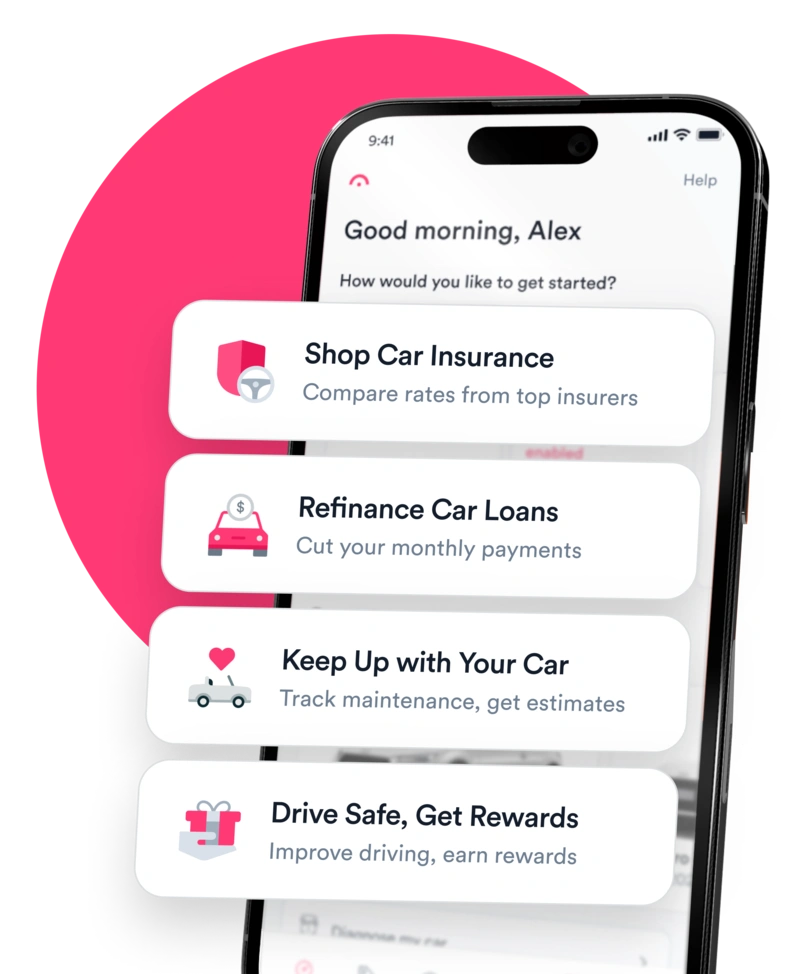
Jerry is the only company that lets you compare motorcycle insurance quotes and buy your policy right in the app. With Jerry, you can:
🔍 Compare insurers in one place. See prices and coverage from top carriers in one place. Instead of spending hours gathering quotes, Jerry pulls them together in minutes.
📱 Buy entirely online. Get covered without the unwanted phone calls or spam. Jerry never sells your data, backed by bank-level security.
💬 Get help when you need it. Not sure how much uninsured motorist coverage to carry, or whether MedPay fits your situation? Jerry’s licensed agents are a chat or call away, 7 days a week.
🔁 Stay protected over time. Jerry monitors your rate, tells you when it is time to reshop, and reminds you about renewals. We’re your insurance assistant, not just a one-time tool.
Why it matters: Insurers price Texas’ risks differently than other states, so comparing quotes matters. Jerry does that comparison for you right in the app.
Alternatives to getting a motorcycle insurance policy
Like a handful of other states, Texas lets you prove financial responsibility without a standard insurance policy. You don’t need to buy motorcycle insurance if you do any of the following.
💰 Cash or securities deposit. You can deposit $55,000 in cash or securities with the county comptroller, or $55,000 with the county judge, to cover potential liability.
📄 Surety bond. You can file a surety bond of $55,000 with the county clerk that names two people who both own real property in Texas.
📑 Self-insurance certificate. Texas issues this to owners of a large number of vehicles who can prove they can cover their own liability.
Key takeaway: These options may sound like loopholes, but locking up $55,000 to skip a policy isn’t the best financial decision for most riders, since a motorcycle insurance policy costs much less.
Texas’ helmet rule
Texas has a partial helmet law. Every rider and passenger under 21 must wear a DOT-compliant helmet at all times, with no exceptions. Riders 21 and older can ride without a helmet only if they have completed an approved motorcycle safety course or carry health insurance that covers motorcycle accident injuries, according to Texas Transportation Code Section 661.003.
Even where the law allows it, all riders should wear a helmet. Data from the National Highway Traffic Safety Administration shows helmets sharply reduce the risk of fatal and serious head injuries, and the medical bills from a crash without one can run high.
Jerry recommends: Always wear a DOT-compliant helmet, not just to follow the law but to protect your life. Because Texas uses comparative fault, riding without one can also reduce the compensation you get if you are hurt in a crash.
What happens if you ride uninsured
Riding without proof of insurance in Texas is illegal and comes with consequences.
🚫 Fines and a possible impound. A first offense can bring fines of a few hundred dollars, and repeat offenses cost more. Your bike can be impounded and your license suspended.
📋 SR-22 requirement. After certain violations you may have to file an SR-22 certificate through your insurer to prove coverage, usually for two years, which raises your premium.
🛑 Registration and license trouble. Texas requires proof of insurance to register your motorcycle and renew your plates, so going uninsured can stop you from keeping your bike road legal.
⚖️ You are personally liable. If you cause a crash, the injured person can sue for your savings, wages, and assets to cover anything beyond your coverage.
Key takeaway: Skipping coverage in Texas is illegal and treated as a Class C misdemeanor. Without it, you’re responsible for all injuries or damage you cause, and you face fines plus a possible registration and license suspension.
Insurance Texas riders should consider
Texas’s state minimums satisfy the law, but are generally too low to fully protect you. Here is what Jerry recommends Texas riders consider when buying a motorcycle policy.
🛡️ Liability limits of 100/300/100. That means $100,000 in bodily injury per person, $300,000 per accident, and $100,000 in property damage, well above the 30/60/25 minimum.
🚗 Uninsured and underinsured motorist coverage. Roughly one in seven Texas drivers is uninsured, according to the Insurance Research Council, and many more carry only minimum limits. Texas insurers must offer UM/UIM coverage, and you have to reject it in writing to decline it. We recommend keeping it and matching your UM/UIM limits to your liability limit.
🏍️ Comprehensive and collision. Add comprehensive and collision if you could not easily replace your bike out of pocket. Comprehensive covers theft, weather such as Texas hail, and vandalism, while collision covers crash damage to your own motorcycle.
➕ Medical payments coverage. Texas liability does not pay for your own injuries, so MedPay helps cover your medical bills after a crash, no matter who is at fault.
Jerry recommends: Consider carrying 100/300/100 in liability and matching your uninsured and underinsured motorist coverage to those same limits, which helps protect you from Texas’s high number of uninsured drivers. And if replacing your bike out of pocket would be a stretch, add comprehensive and collision as well.

Get covered and ride confident with Jerry.
FAQ
- Is motorcycle insurance required in Texas?
- What does 30/60/25 mean?
- Do I have to wear a helmet in Texas?
- Does my Texas liability policy cover my own injuries?
- What is comparative fault in Texas?
- What happens if I cause a crash without insurance in Texas?

Ben Moore is a writer and editor at Jerry and an auto insurance expert. He previously worked as a writer, editor and content strategist on NerdWallet’s auto insurance team for five years. His work has been published in The Associated Press, Washington Post, Chicago Sun-Times, MarketWatch, Nasdaq and Yahoo News. He also served as a NerdWallet spokesperson, with appearances on local broadcast television and quotes in Martha Stewart and Real Simple magazine.
Ben has an extensive background in digital marketing, working on affiliate and programmatic advertising campaigns for brands like Cabela’s, H&R Block and Sears. He holds a bachelors degree in marketing from Olivet Nazarene University.