
Generally, steering wheel shake often means a front-end issue while a seat/floor buzz often points to the rear. This perspective reflects Jerry’s experience helping over 40,000 customers access accurate repair prices and find solutions. In this guide, you’ll learn what’s risky, common causes, typical fixes and when to call a pro.
Download the Jerry app to estimate repairs from a national database, check open recalls, and find nearby shops for wheel alignment and balancing—no phone calls.
Real customers Jerry helped
While pricing can vary based on different factors like location, parts used, and exact vehicle, Jerry uses real customer experiences to show what drivers are paying right now. Here are a few customer examples.
Date | Repair Job | Customer Name | Car | Location | Part cost | Labor time (min) | Labor cost | Total cost |
|---|---|---|---|---|---|---|---|---|
| 10/05/26 | Engine Mount | Daniel M. | 2009 Land Rover Range Rover | Redmond, OR | $153.94 | 170 | $371.18 | $525.12 |
| 10/05/26 | Strut Assembly – Front | Gene S. | 2012 GMC Canyon | Arlington, VA | $104.45 | 150 | $339.00 | $443.45 |
| 10/05/26 | Engine Mount | Carl B. | 2005 Volkswagen Jetta | Olympia, WA | $68.26 | 190 | $388.06 | $456.31 |
| 10/05/26 | Wheel Bearings – Driver Side Front | David M. | 2003 Lexus RX300 | Powhatan, VA | $53.14 | 80 | $168.51 | $221.66 |
| 10/05/26 | Tie Rod End – Front Left Outer | Edgar A. | 2001 Ford Ranger | Roswell, GA | $25.26 | 45 | $89.95 | $115.20 |
| 10/05/26 | Strut Assembly – Front | Olive C. | 1997 Toyota Corolla | Casper, WY | $120.39 | 165 | $345.57 | $465.96 |
| 10/05/26 | Wheel Hub Assembly – Driver Side Front | Vernon S. | 2005 Chrysler 300 | Bakersfield, CA | $104.40 | 75 | $159.28 | $263.68 |
Estimates are modeled based on real vehicle and location data; names have been changed. Actual prices will vary by shop, parts, and vehicle condition.
At-a-glance: can I keep driving?
Jerry customers find that small shakes can hint at bigger problems. In your case, match what you feel to the right urgency. Use this quick guide to decide what to do next.
🚨 Urgent—slow down, pull over safely, and get help
- Violent shaking with a thumping tire sound (possible tread/belt failure)—risk of blowout.
- Shudder plus burning smell or smoke after braking hard—rotor/pad overheating.
- Vibration with clunks during acceleration and turning—failing CV axle could break.
- Loud humming/growl that gets worse when turning—wheel bearing may be near failure.
🕒 Soon—okay to drive, fix this week
- Steering wheel shimmy at 50–70 mph. This may be a wheel imbalance or a bent rim.
- Brake pedal pulsates when slowing—rotors likely have DTV or pad deposits.
- Car vibrates under acceleration but smooths when cruising—mount or axle wear.
- Constant mild buzz through the seat that tracks speed—possible driveshaft or tire cupping.
✅ Monitor—safe to drive
- Light vibration only on certain road surfaces—normal road texture.
- Brief morning shake that fades in a few miles—tire “flat-spot” after sitting.
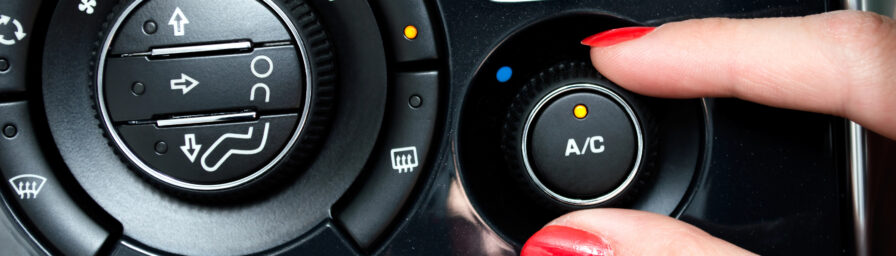
- Slight idle shake with A/C on—engine load change is normal if it’s gentle.
Tires and brakes usually degrade first, and they affect safety right away. Catching tire, rotor or bearing issues early prevents sudden failures and saves other parts from damage as well.
Symptoms
Use the table to match what you feel with likely causes and typical fixes. Prices are ballparks for what Jerry customers are seeing at U.S. shops and can vary by vehicle and region (European/performance vehicles often run higher).
Notes: Steering wheel = usually front, seat/floor = often rear. A gentle weave at 40–60 mph can hint at a bad bearing (louder on left turn = right bearing load). AWD/4WD often requires closely matched tire sizes; mismatched tread can add vibration and damage the drivetrain. EVs’ instant torque can “cup” tires faster if rotations are skipped.
Risks if you ignore it
Shakes stress parts and reduce safety. Jerry customers are fixing early to avoid bigger bills.
Tire damage or blowouts. Unbalanced or damaged tires overheat and can fail at speed.
Longer stopping or warped brakes. Rotor issues (DTV/deposits) reduce braking power and can crack rotors.
Bearing or axle failure: Worn bearings/CV joints can seize or break, causing loss of control.
Extra wear everywhere: Vibrations beat up shocks, bushings and mounts—and even your wallet.
Often, early fixes run in the hundreds, not thousands, if you act soon.
The situation was that the front outer wheel bearing on one or both sides had failed, causing the wheel to wobble back and forth. Since the brake rotor is attached to the wheel, it was wobbling also, pushing the brake piston and brake pad back in the caliper. Several pumps were needed to move the piston and pad back to their normal position and provide braking action. With the bearings at that state, the repair almost always required replacing the front wheel spindle (since the bearing inner race was seized on the spindle) or maybe a brake rotor (since the cavity for the outer race was galled and wouldn’t retain a new race).
The moral of the story? This repair would have been far less expensive if addressed when the client first heard the rumbling noise: a set of bearings would have solved the problem

Can I fix this myself? (DIY vs. pro)
Start simple and safe. Many shakes come from tire issues or recent wheel service. If you’re unsure, a shop can pinpoint the cause quickly. Jerry’s knowledge of labor and parts rates can help you make the right decision on repair approach. Safety starters: be sure to park on level ground, set the parking brake, let hot brakes cool and wear eye protection.
DIY (easy, low risk)
Start with basic checks you can do at home. These can confirm symptoms:
Check tire pressure (PSI) cold and set to the door-sticker spec. A low/high PSI causes shakes and uneven wear.
- Inspect tread for deformities (bubbles, splits, cords, or cupping). Be sure to replace any damaged tires immediately.
- Remove packed mud or ice from wheels and inner fenders. This built-up mass throws wheels off balance.
- Rotate front↔rear to see if the shake moves; if it does, suspect a tire/wheel.
- Do a gentle bearing swerve test on a safe, empty road; louder on left turn often points to the right bearing (and vice versa).
- Quick mount check: foot on brake, shift to Drive, blip throttle; repeat in Reverse. Excessive engine movement = bad mount.
- Note when it shakes (speed, braking, turning, acceleration); clear notes help a tech find the root cause.
- If a shake started after tire/brake work, have the shop re-torque lugs to spec.
Pro (recommended)
Shops have tools to measure runout (wobble), balance, and component play. They can also road-test safely.
- Road-force balance all four tires; target <15–20 lbs (many cars feel best <12 lbs). Ask for match-mounting (red/yellow dot alignment).
- Inspect wheels/tires for bends, shifted belts or missing weights; replace/straighten as needed. Check for hub-centric rings on aftermarket wheels.
- Clean hub faces (remove rust), measure wheel/rotor runout; typical wheel ≤0.030″ and tire radial ≤0.060″. Measure rotor DTV (~0.0005–0.001″) and correct if out.
- Measure brake rotors and check caliper slide pins; resurface/replace rotors and pads if out of spec. Bed pads properly.
- Check suspension/steering parts (tie-rods, ball joints, bushings) and align the vehicle to spec; provide the alignment printout.
- Inspect CV axles, motor mounts and wheel bearings; replace worn parts before they fail.
- For RWD/AWD, check driveshaft balance, U-joints and (if equipped) center support bearing. Verify pinion/shaft angles on lifted vehicles.
- Final torque with a torque wrench to factory spec (not just torque sticks).
Special notes
A few platforms have extra needs. These can change the right fix.
- AWD/4WD: Keep tire sizes/tread depth closely matched (within ~2/32–3/32″) to protect the transfer case and avoid vibration.
- EVs/hybrids: Heavier vehicles and regen braking can mask rotor issues—inspect brakes at least yearly; watch for rust imprint judder after sitting.
- Large wheels/low-profile tires: More prone to bends and cupping; consider road-force balancing.
What NOT to do
Avoid these common mistakes that can make things worse or unsafe.
- Don’t drive at highway speeds if the vibration is severe or rapidly getting worse.
- Don’t keep driving with brake shudder; heat can damage calipers and wheel bearings.
- Don’t throw on “quick fixes” like beads or sealants without diagnosis; you may hide a safety issue.
Prevention
Jerry customers are following small habits to cut vibration problems and save tires, brakes and bearings. Use these intervals to stay ahead.
Check tire pressure monthly and before road trips; aim for the door-sticker PSI.
Rotate tires every 5,000–7,500 miles (follow your manual) to prevent cupping and heel-toe wear.
Balance tires whenever you install new ones and after any impact that bends a rim.
Get an alignment yearly or after curb/pothole hits, pull, or uneven wear.
Replace worn shocks/struts around 60,000–100,000 miles; they prevent tire hop and shake.
Bed in new pads/rotors per manufacturer instructions to prevent pad deposits and judder.
Re-torque lug nuts 50–100 miles after wheel service to spec (shop can do this quickly).
In winter, clear snow/ice from wheels and inside rims before highway speeds.
Download Jerry to set maintenance reminders and view open recalls for your car so you catch issues before they shake your ride.
What our customers are asking
- Is some vibration normal?
- How do I tell tire balance vs. alignment?
- Why does it only shake when braking?
- Can a motor mount really make the car shake?
- What about winter “flat spots” on tires?
- How do I test without driving?
- Is this covered by recalls or TSBs?
- How can I test safely to narrow it down?

Steve Kaleff began working on cars at the very young age of nine years old, when his dad actually let him make fixes on the family car. Fast forward to the beginning of a professional career working at independent repair shops and then transitioning to new car dealerships. His experience was with Mercedes-Benz, where Steve was a technician for ten years, four of those years solving problems that no one could or wanted to fix. He moved up to shop foreman and then service manager for 15 years. There have been tremendous changes in automotive technology since Steve started his professional career, so here’s looking forward to an electric future!

Nick Wilson is an editor, writer, and instructor across various subjects. His past experience includes writing and editorial projects in technical, popular, and academic settings, and he has taught humanities courses to countless students in the college classroom. In his free time, he pursues academic research, works on his own writing projects, and enjoys the ordered chaos of life with his wife and kids.