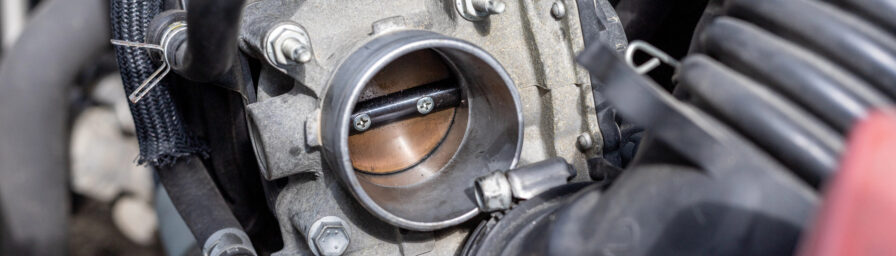


This is most commonly caused by misfires due to spark or fuel issues, vacuum leaks or dirty airflow metering parts like the throttle body or Mass Airflow (MAF) sensor. After helping 400,000 customers with repairs and maintenance at Jerry, we’ve also found other, less frequent culprits:
- Stuck-open Exhaust Gas Recirculation (EGR) valve
- Clogged injector
- Intake manifold gasket leak
- Brake booster leak
- Manifold Absolute Pressure (MAP) sensor fault
- Low compression
- Worn engine mount causing excessive movement
In this guide, you’ll learn what’s safe, likely causes, typical fixes with prices and when to call a pro, plus simple prevention tips.
Want to run a few tests before seeing a mechanic? Join the 40,000 people who have used our AI diagnosis chatbot by downloading the Jerry app.
Real customers Jerry has helped
Costs for fixing you car’s rough idle depend on your exact vehicle, where you live and the quality of parts used. With Jerry, you can quickly see what drivers are paying right now. Below are real examples of customers we’ve helped secure top prices for when they need a fix for their rough idle issue.
Estimates are modeled based on real vehicle and location data; names have been changed. Actual prices will vary by shop, parts, and vehicle condition.
At-a-glance: Can I keep driving?
Use this quick guide to decide what to do next if you’re dealing with a rough idle.
- 🚨 Urgent—turn it off and get help (roadside assistance or tow)
- Check Engine Light flashing or car shaking hard (active misfire can damage the catalytic converter).
- Strong fuel smell or visible leak (fire risk).
- Engine stalls in traffic or loses power steering/brake assist (safety hazard).
- Oil pressure or temperature warning lights with rough idle (engine damage risk).
- 🕒 Soon—OK to drive but fix this week
- Check Engine Light solid with a mild shake at stops.
- Idle surging or nearly stalls, then recovers.
- Rough idle worsens with A/C on or headlights/fans running.
- Poor fuel economy or sluggish acceleration along with rough idle.
- ✅ Monitor—safe to drive
- Slight vibration at idle but smooth while driving (could be a worn engine mount).
- Brief roughness only on cold start that clears in a minute.
Symptoms, likely causes and typical fixes
Download the Jerry app to compare local automotive repair quotes side-by-side in minutes.
Risks if you ignore it
Before you put off seeing a pro for your rough idle issue, know what’s at stake. These issues can snowball quickly if left untreated.
Catalytic converter damage: Unburned fuel from misfires overheats and melts the catalyst.
Safety risk: Stalling in traffic cuts power assist and can cause an accident.
Higher repair bills: Small vacuum leaks and dirty parts strain coils, sensors and the converter.
Poor fuel economy: Rich or unstable idle burns more fuel and can foul plugs and O2 sensors.
Emissions/inspection failure: Rough idle often triggers codes that fail a smog check.
Can I repair this myself? (DIY vs. pro)
There are safe steps you can try at home, but Jerry always stresses keeping safety in mind before working on your car. Make sure the engine is cool, park on level ground and wear eye protection. Start small, then escalate if needed to catch deeper causes.
DIY (easy, low risk)
These are quick checks and fixes that most drivers can safely try before calling a mechanic.
- Inspect visible air intake tube and vacuum hoses for cracks or loose clamps; re-seat connections. Unmetered air causes unstable idle.
- Replace a dirty engine air filter (12k–24k miles). Better airflow stabilizes the mixture.
- Clean throttle body bore (front side only) with throttle-body cleaner and a rag; don’t force an electronic throttle plate open. Deposits restrict airflow at idle.
- Add a quality fuel system cleaner to a fresh tank. Mild injector deposits can smooth idle over a few drives.
- Check oil level and top up. Low oil can worsen idle quality on some engines with variable valve timing.
- Quick checks: Remove oil cap briefly at idle—a stumble/hiss change suggests PCV flow; no change can indicate a stuck-open PCV/large leak.
- Press and hold brake—if idle changes and you hear a hiss, suspect a brake booster leak.
- Hold brake, shift D/R, slightly raise RPM—excessive engine movement points to a bad mount.
Pro (recommended)
You can find a highly-rated mechanic you trust in the Jerry app, which is important because a good shop will look past the obvious and use scan tools, leak detections machines and experience at their disposal. These are a few tests the technician may perform to track down the problem:
- Vacuum leak or smoke test: Finds engine leaks the engine computer has not accounted for, like cracked hoses or intake gasket leaks. Air leaks can lean the fuel mixture and cause a rough idle.
- Compression test: Measures how much pressure each cylinder can build during cranking. Low or uneven readings can point to burned or cracked valves, worn rings or timing issues.
- Injector balance test: Measures fuel delivery from each injector by watching the pressure drop as they are pulsed. A lower than expected drop in pressure can point to a clogged fuel injector.
- Fuel pressure test: Confirms the fuel pump and regulator are holding a steady pressure. Low pressure causes lean misfires; high pressure from a faulted regulator can foul spark plugs.
- Power balance/cylinder contribution test: Checks each cylinder’s effect on engine RPM. If a cylinder isn’t pulling its weight, it shows up on the graph.
Special notes
Jerry customers have found that some models behave differently, so here are a few caveats:
- Turbo and direct-injection engines are more sensitive to small air leaks and carbon; earlier cleaning service intervals may be needed.
- In cold weather, a slightly higher idle for 30–60 seconds is normal; extended roughness is not.
- If your car has start-stop, occasional mild shudder on restart is normal but sustained shaking is not.
Prevention
Good habits and simple maintenance intervals help keep idle smooth and repairs affordable.
Replace spark plugs on schedule (typically 60k–100k miles) to prevent misfires and coil stress.
Change the engine air filter every 12k–24k miles, or sooner in dusty areas, to keep airflow stable.
Clean the throttle body every 30k–50k miles, especially if you do lots of short trips.
Inspect/replace PCV valve and brittle vacuum hoses every 60k miles or if you hear hissing.
Use Top Tier fuel and add a fuel system cleaner every 5k–10k miles to reduce deposits.
Keep the battery and charging system healthy; low voltage can cause unstable idle.
Fix small exhaust or intake leaks promptly; they skew sensor readings and fuel trims.
What NOT to do
A few missteps can make things worse or cause new damage. Avoid these while troubleshooting.
- Don’t keep driving with a flashing Check Engine Light; it can quickly cook the catalytic converter.
- Don’t spray cleaners into the intake while the engine runs; you can damage the MAF/IAC. Only use MAF-specific cleaner on MAF sensors.
- Don’t replace random parts without a scan and basic tests; it wastes money and time.
After looking the vehicle over, I pulled up the factory service information and found the issue. It turned out that on this model, the ECM adjusts the throttle plate automatically to compensate for carbon build-up. When the throttle body is cleaned, the throttle angle and idle speed must be reset with a scan tool.
I performed the idle speed re-learn procedure and the engine came back to a smooth idle. Throttle body cleaning seems simple enough, but it doesn’t hurt to check whether a re-calibration is necessary when servicing electronics. Some DIY projects can just take an unexpected turn.

👉 Want quick repair estimates, recall checks or local shop quotes without phone calls? Download the Jerry app to get everything in minutes.
What our customers are asking us
-
What is a “rough idle” and what’s normal?
-
Can I drive with a rough idle?
-
How much does a rough idle cost to fix?
-
Could motor mounts cause rough idle? -
How do conditions affect idle?
-
Can a dirty throttle body or MAF cause rough idle?
-
Are there recalls or TSBs for rough idle?

Jerel Lawrence is an experienced and certified automotive technician with a strong foundation in diagnostics, repair and technical mentorship. A graduate of NASCAR Technical Institute in 2010, Jerel began his career at national automotive repair chain locations, where he earned eight certifications from the National Institute for Automotive Service Excellence (ASE).
From 2017 to 2022, he worked as a General Motors-certified technician at a Cadillac dealership, refining his skills in manufacturer-specific diagnostics and service procedures. Today, Jerel leads as the senior technician and mentor at a family-owned repair facility, where he helps guide the next generation of technicians while ensuring top-quality service.
In addition to hands-on work, Jerel contributes to the automotive community through writing detailed articles and answering technical questions to help vehicle owners better understand and care for their cars.

Everett Cook is an award-winning journalist and editor with more than 10 years of experience across a variety of industries. In editing for Jerry, Everett’s mission is to help readers have a better understanding of the costs of owning or leasing a car and to better understand their vehicle in terms of insurance and repairs. Prior to joining Jerry, Everett was an editor for Axios. His previous work has been featured in The New York Times, The Los Angeles Times, The San Francisco Chronicle, The Atlantic, Atlantic Re:think, The Boston Globe, USA Today, and others. He’s also been a freelance writer and editor with experience in SEO, audience building, and long-term content roadmaps. Everett is a proud graduate of the University of Michigan.