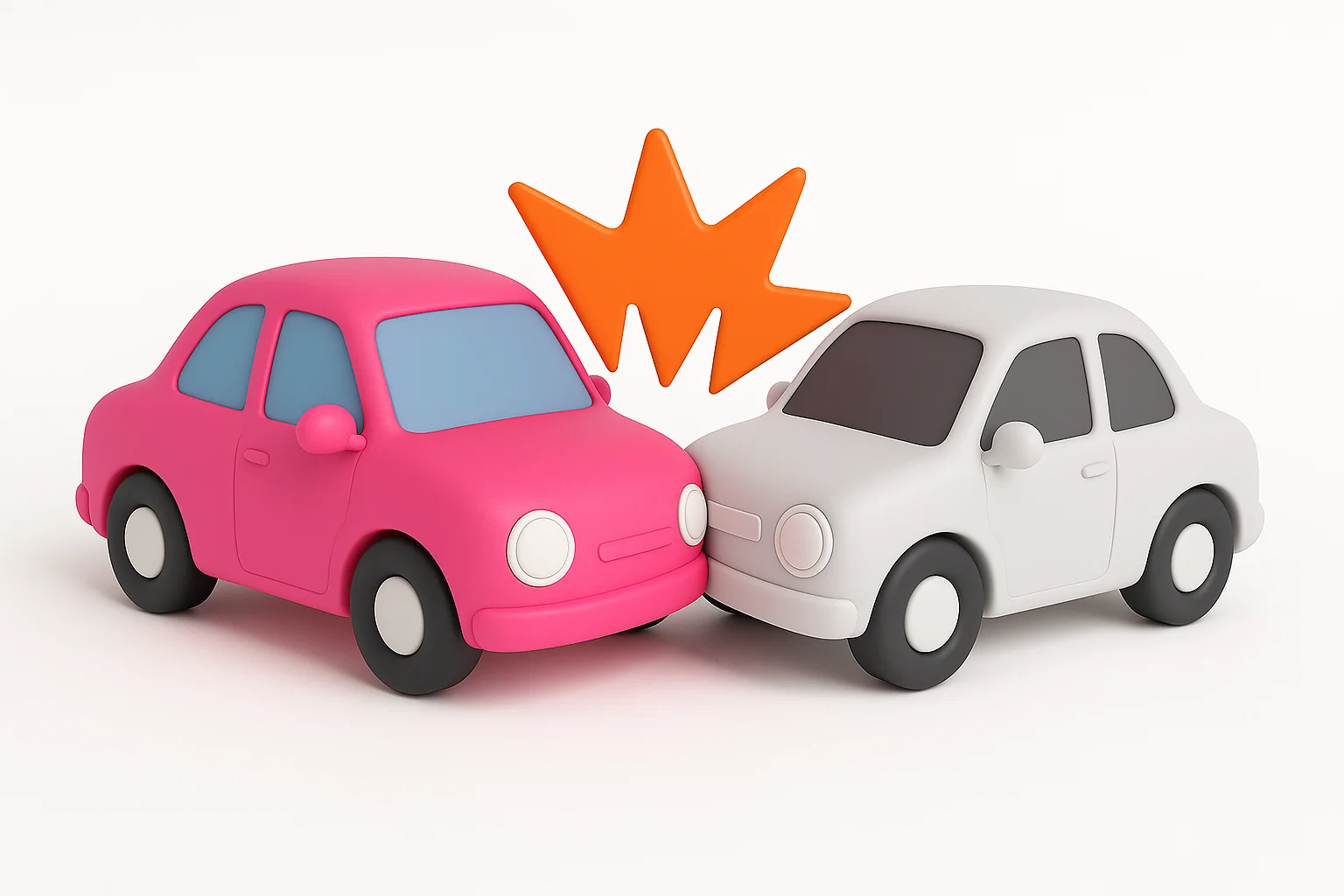

Head-on collisions are some of the deadliest crashes on the road. They only make up about 4% of all accidents, but they cause nearly 11% of all traffic deaths, according to data from the National Safety Council. Whether you caused the crash or were hit head-on, it can hit your wallet hard – through higher insurance rates, big repair bills, or medical costs.
Jerry has helped 110,276 drivers get car insurance policies with collision coverage for between $156-$272 per month, protecting them from the steep costs of serious accidents.
Here’s what to know about the financial and insurance impact of a head-on collision, and how to protect yourself.

Jerry pulls up to 20 quotes from top rated carriers.
How much a head-on collision affects insurance costs
When two vehicles collide head-on, even at moderate speeds, it often means injuries, damaged vehicles and insurance claims that can stretch well into six figures. If you’re at-fault, claims can reach over $100,000, and you could be at risk of a lawsuit.
After a head-on collsion, your rate is also likely to go up. Here’s how much car insurance can cost after an accident according to Jerry’s data, depending on who’s at fault.
Based on Jerry customers with clean records and those with one or more accidents who found savings in the past 18 months. Savings vary by state, coverage, driver profile and other factors.
Key takeaway: Even if you’re not at fault, serious crashes still raise rates because insurers see these events as higher risk.
What car insurance covers after a head-on collision
How much your car insurance pays for after a head-on crash depends on your limits and the coverages on your policy.
Why it matters: Head-on collisions often total cars and cause major medical bills, and state minimum liability limits usually aren’t enough. Consider carrying at least 100/300/100 in liability insurance and adding collision and comprehensive for greater financial protection.
Compare quotes after a collision with Jerry
Your rates will likely go up after a collision claim, even if you weren’t at fault. That makes it a good time to shop around and see whether another insurer can offer a better price or a coverage setup that fits your budget. The Jerry app lets you compare quotes side-by-side, including collision coverage, and adjust your deductible to find the right balance between out-of-pocket costs and monthly savings.
Jerry works with over 50 carriers to compare quotes in minutes, and can shop for new rates when your policy is up for renewal.
The coverage you need for financial protection
The more coverage you have, the more protected you are in case of an accident. Consider the following options for maximum protection:
Jerry recommends: If you’ve recently been in a head-on collision, it’s a good idea to shop for new quotes, as your current insurer will likely raise your rates anyway. You can quickly compare quotes side-by-side in the Jerry app.
What to do after a head-on collision
A crash this severe can be chaotic, but a few key steps can protect your health, your insurance claim and your finances.
✅ Get medical attention immediately, even if you feel fine. Adrenaline can mask injuries.
📞 Call 911 so there’s an official police report.
📸 Document the scene. Get photos, note road conditions and take down witness information.
🔄 Exchange insurance and contact details with the other driver.
📝 Contact your insurer promptly to start a claim and do not admit fault.
Why it matters: Head-on collisions often lead to lawsuits, so documentation is important. Keep records of medical bills and repairs, avoid admitting fault and consider legal help if there are major injuries or disputes.
What parts of your car get damaged in a head-on collision?
Head-on crashes almost always damage the front of your car, but the damage usually goes much deeper than what you can see. A crumpled hood or smashed bumper might look like the whole story, but underneath there’s often a bent frame, a wrecked engine, or snapped suspension parts that make the car unsafe to drive.
When repair costs get too high – usually when they hit 70-80% of what the car is worth – your insurer will declare it a “total loss” and pay you the car’s market value instead of fixing it. If you still owe money on a car loan and the payout doesn’t cover what you owe, gap insurance covers that difference.
Collision coverage is what pays for your car’s damage after a head-on crash, regardless of who caused it.
How to prevent a head-on collision
The best ways to avoid a head-on collision are to stay in your lane, never pass when you can’t see clearly ahead, and never drive while drowsy. Most head-on crashes happen on rural two-lane roads, the kind where both directions of traffic share one road with no barrier in between. That’s why staying in your lane matters so much.
Stay in your lane and don’t pass until it’s safe
The number one cause of head-on crashes is crossing the center line, often while trying to pass another car on a two-lane road. If you can’t see clearly all the way ahead, don’t pass. Wait for a marked passing zone and make sure you have a clear, open view before you go.
Don’t drive drowsy
Drowsy driving is one of the main reasons drivers drift out of their lane. Being tired slows your reaction time about as much as being drunk. If you’re struggling to keep your eyes open, pull over and rest. Cracking a window or drinking coffee isn’t enough.
Use your car’s safety features
Many newer cars come with technology designed to prevent exactly this kind of crash:
- Forward collision warning: Senses a car ahead that’s slowing down and alerts you before you rear-end them — or before they hit you head-on.
- Automatic emergency braking: Hits the brakes for you if you don’t react in time.
- Lane keeping assist: Gently steers the car back into your lane if you start to drift, per NHTSA’s driver safety guidance.
- Lane departure warning: Beeps or vibrates your seat to alert you when you’re drifting without signaling.
What to do if a crash seems unavoidable
If a car is coming straight at you and there’s no time to stop, steer to the right, brake hard, and try to turn it into a glancing hit rather than a straight-on collision. A sideways scrape at speed is much less deadly than a direct head-on impact.
How roads are designed to help
Road designers also work to prevent these crashes. They use center line markings and warning signs on curves, and on busier roads they add median barriers to physically stop cars from crossing into oncoming traffic.
How do insurance companies figure out who’s at fault?
In a head-on crash, the driver who crossed into the other lane is usually considered at fault, but your insurance company won’t just take your word for it. They look at a range of evidence to decide how much of the blame goes to each driver. That percentage matters: it determines how much your insurance pays out, and whether your rates go up.
In most states, blame can be split. Say Driver A crossed the center line, but Driver B was going 20 mph over the speed limit. The insurer might say Driver A is 80% at fault and Driver B is 20% at fault. Driver B’s payout would then be reduced by 20%. A handful of states are stricter. If you’re even 1% at fault, you might get nothing.
Jerry’s lets you compare car insurance quotes for the best rate from multiple insurers after an at-fault accident, so you’re not stuck paying more than you have to.
Does it mater what state you’re in? No-fault vs. at-fault States
Yes, where you live affects how your insurance claim works after a head-on collision. States handle this in two very different ways.
At-fault states (most of the U.S.)
In at-fault states, whoever caused the crash is responsible for the bills. If the other driver hit you, their insurance pays for your injuries and car damage. If you caused the crash, your insurance pays for theirs, and you could be personally sued if your coverage isn’t enough to cover all the damage.
No-fault states
There are 12 no-fault states. In no-fault states, it doesn’t matter who caused the crash: you file with your own insurance first. Your personal injury protection (PIP) coverage pays your medical bills and lost wages, up to your policy limit.
But here’s the thing: head-on collisions are almost always serious enough that you can step outside the no-fault system and sue the at-fault driver directly. That’s because these crashes typically cause the kind of severe injuries that meet the legal threshold for filing a lawsuit, even in no-fault states.
What if the damage costs more than my insurance can cover?
Head-on crashes often cause serious injuries with medical bills that can easily run into the hundreds of thousands of dollars. Many minimum car insurance policies have limits of $25,000 or $50,000 for injury liability. In a bad head-on crash, that can run out fast.
Here’s what happens next:
- If the other driver was at fault and their coverage isn’t enough: Your own uninsured/underinsured motorist (UM/UIM) coverage kicks in to cover the difference, up to your UM/UIM limit.
- If you were at fault and your liability coverage runs out: The other driver can sue you personally for the rest. Your savings, your home and other assets could be at risk.
- Umbrella insurance: This is extra coverage that kicks in after your regular car insurance is maxed out. It typically adds $1 million or more of protection, and it’s usually much cheaper than people expect.
- If your car is totaled and you still owe on a loan: Gap insurance covers the difference between what your insurer pays you (the car’s current market value) and what you still owe on the loan.
Why it matters: If you drive on rural roads or highways where head-on crashes are more common, it’s worth checking that your UM/UIM limits are high enough, and considering umbrella insurance as a safety net. Jerry can help you compare both alongside your regular car insurance.

It only takes 2 minutes to sign up at Jerry.
FAQ
-
Who’s usually at fault?
-
Will my insurance cover damage to my car if I’m at fault?
-
Should I hire a lawyer?
-
How long will a head-on collision stay on my insurance record?
-
What if the other driver doesn’t have insurance?
-
Can my claim be denied after a head-on collision?
-
How do insurance companies decide who’s at fault in a head-on collision?
-
What parts of my car get damaged in a head-on collision?
-
Does it matter if I live in a no-fault state after a head-on collision?
-
What if the bills from the crash are more than the other driver’s insurance covers?
-
What is a diminished value claim?
Methodology
Data included in this analysis comes from policies that Jerry has quoted within the last 6 months for drivers with a clean record and that have full coverage, unless stated otherwise. Data related to violations, accidents or credit scores pull from quote data from the last 18 months. Jerry services 48 states and offers a range of insurance companies to choose from.

Ben Moore is a writer and editor at Jerry and an auto insurance expert. He previously worked as a writer, editor and content strategist on NerdWallet’s auto insurance team for five years. His work has been published in The Associated Press, Washington Post, Chicago Sun-Times, MarketWatch, Nasdaq and Yahoo News. He also served as a NerdWallet spokesperson, with appearances on local broadcast television and quotes in Martha Stewart and Real Simple magazine.
Ben has an extensive background in digital marketing, working on affiliate and programmatic advertising campaigns for brands like Cabela’s, H&R Block and Sears. He holds a bachelors degree in marketing from Olivet Nazarene University.