

Key Takeaways
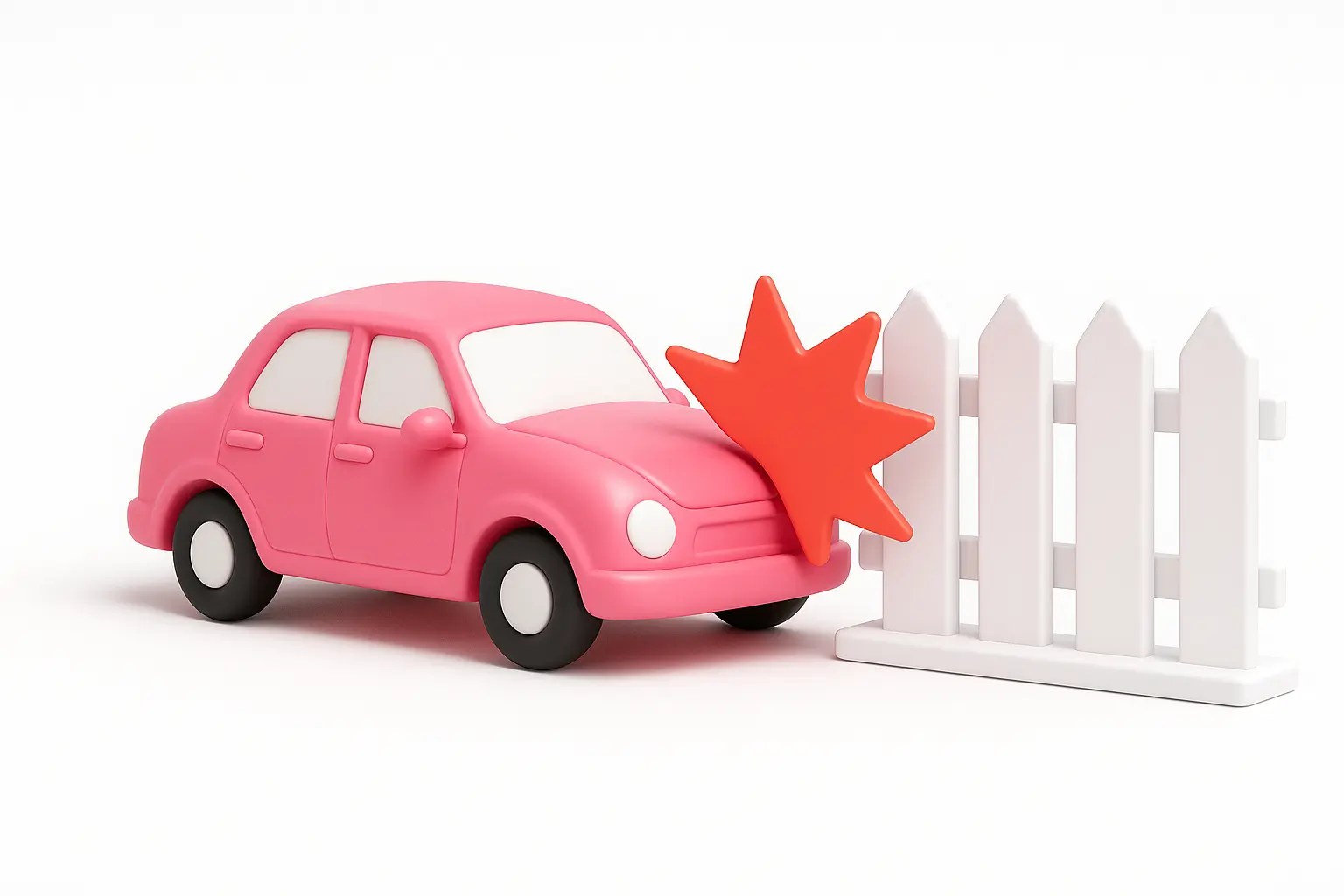
- Property damage liability pays to repair other people’s property when you cause an accident. It covers their car, fence, building or other property, but not your own car.
- It’s required in 49 states and D.C. New Hampshire is the only state that doesn’t require it, though drivers in that state are still financially responsible for any damage they cause while driving
- State minimums are often too low. The average property damage claim was $6,770 in 2024 according to the Insurance Information Institute, but a crash involving a luxury vehicle or multiple cars can easily exceed $50,000.
Property damage liability is a type of car insurance that pays to repair or replace another person’s vehicle, fence, building or other property when you cause an accident. It is required in 49 states and Washington, D.C. (New Hampshire is the only exception).
Jerry has helped 240,241 drivers get the right amount of property damage liability coverage and we encourage drivers to consider higher limits than the state minimum to protect your finances in case of an accident.
Jerry pulls up to 20 quotes from top rated carriers.
What property damage liability does and doesn’t cover
| Covered | Not covered |
|---|---|
| Other people’s car repairs. | Your car repairs. |
| Other people’s damaged buildings or structures. | Your property damage. |
| Other people’s fences, mailboxes and landscaping. | Damage costs over your policy limits. |
| Rental car costs for the other driver. | Your rental car expenses. |
| Legal defense if you’re sued. | Medical bills or injuries. |
Property damage liability is one half of your liability insurance. The other half is bodily injury liability, which covers medical costs for people hurt in an accident you cause. Together, these two coverages make up what’s called liability insurance, which most states require you to have.
Jerry recommends: Don’t skip property damage liability insurance—it’s often illegal to drive without it. Plus, you’d have to pay out of pocket for any damage you cause in a crash. Get covered quickly by comparing quotes with property damage liability in the Jerry app.
How property damage liability works
Property damage liability has a single limit and is commonly expressed as the third number in a liability policy, such as 25/50/25.
That third number (25) represents the policy’s per-accident limit, which is the maximum amount that will be paid for property damage you cause in a crash — in this case, $25,000. The first two numbers in the liability limits (15/30) are for bodily injury liability.
Key takeaway: Property damage liability has no deductible. Your insurance pays covered property damage costs up to your limit, and you’re responsible for anything beyond that amount.
Learn more: How car insurance works in at-fault states
How much property damage liability you need
All states have established drivers to have a minimum amount of property damage liability insurance, but those minimums are often too low to pay for vehicle repairs or replacement after a severe crash.
Why it matters: The average property damage claim was $6,770 in 2024, according to III. But if you hit a luxury car, costs could easily exceed $50,000. You could face massive out-of-pocket costs unless you raise your PD limits above state minimums.
Car repair costs have been climbing steadily. According to CCC Intelligent Solutions, the average total cost of repair reached over $4,730 in 2024, a 3.8% increase over the prior year. Electric car repairs are even more expensive; nearly 47% higher than repairs for gas-powered cars. As more EVs and luxury cars hit the road, the chances of a property damage claim exceeding your policy limits continue to grow.
Minimum property damage liability requirements by state
Every state except New Hampshire requires drivers to carry a minimum amount of property damage liability. Here are the minimums for all 50 states and Washington, D.C.
| State | PD minimum | State | PD minimum |
|---|---|---|---|
| Alabama | $25,000 | Nebraska | $25,000 |
| Alaska | $25,000 | Nevada | $20,000 |
| Arizona | $15,000 | New Hampshire | No minimum* |
| Arkansas | $25,000 | New Jersey | $25,000 |
| California | $15,000 | New Mexico | $10,000 |
| Colorado | $15,000 | New York | $10,000 |
| Connecticut | $25,000 | North Carolina | $50,000 |
| Delaware | $10,000 | North Dakota | $25,000 |
| Florida | $10,000 | Ohio | $25,000 |
| Georgia | $25,000 | Oklahoma | $25,000 |
| Hawaii | $10,000 | Oregon | $20,000 |
| Idaho | $15,000 | Pennsylvania | $5,000 |
| Illinois | $20,000 | Rhode Island | $25,000 |
| Indiana | $25,000 | South Carolina | $25,000 |
| Iowa | $15,000 | South Dakota | $25,000 |
| Kansas | $25,000 | Tennessee | $15,000 |
| Kentucky | $25,000 | Texas | $25,000 |
| Louisiana | $25,000 | Utah | $25,000 |
| Maine | $25,000 | Vermont | $10,000 |
| Maryland | $15,000 | Virginia | $25,000 |
| Massachusetts | $30,000 | Washington | $10,000 |
| Michigan | $10,000 | West Virginia | $25,000 |
| Minnesota | $10,000 | Wisconsin | $10,000 |
| Mississippi | $25,000 | Wyoming | $20,000 |
| Missouri | $25,000 | Washington, D.C. | $10,000 |
| Montana | $20,000 |
*New Hampshire does not require car insurance but holds drivers financially responsible for any damage they cause. Limits shown reflect 2026 requirements; several states raised minimums in 2025 (see below).
States that recently raised property damage liability minimums
Several states increased their minimum liability requirements in 2025 and 2026.
These increases reflect the growing gap between outdated state minimums and the actual cost of car repairs and property damage.
Learn more: How much car insurance do I need?
Jerry recommends: Choose limits high enough to cover hitting an expensive car or causing multiple-car damage. Jerry recommends that you consider property damage limits of at least $100,000 to protect your finances in case of an accident.
How much it costs for higher property damage liability limits
Here’s what Jerry users have paid over the last six months for the most common state minimum limit ($25,000) versus higher property damage liability limits.
| Coverage level | Monthly cost |
|---|---|
| $25,000 PD | $93 – $238 |
| $100,000 PD | $127 – $297 |
| Difference | +$34 – $59 |
Based on drivers with no accidents or violations who saved with Jerry over the past 6 months. Quotes and coverage not available for all customers.
For as little as $34 more per month, you get protection that’s 4x times higher than most state minimums.
Why it matters: Even if you think you won’t cause major damage, consider that luxury cars are increasingly common. A single accident with a Tesla Model S or BMW 7 Series could exceed $75,000 in repairs.
Compare policies with property damage liability with Jerry
When shopping for car insurance, it’s important to compare property damage limits to find the right balance of protection and cost.
Jerry quickly shows you up to 20 quotes from top rated carriers so you can see how different limits affect your premium.
Find insurance in your state





Factors that affect your property damage liability costs
Several factors influence your property damage liability rates:
🚙 Driving record: At-fault accidents and violations increase costs.
📍Location: Areas with expensive vehicles typically cost more.
💰Coverage limits: Higher limits cost more but provide better protection.
🕰️ Insurance history: Continuous coverage helps keep rates lower.
💳 Credit score: Lower credit scores mean higher car insurance costs.
Property damage liability vs. other car insurance coverages
Understanding the differences between property damage liability and other types of car insurance can help you choose the right coverage. Here’s how they compare.
What to know about property damage claims
Property damage activates whenever you’re at fault and damage property, including:
💥 Rear-ending another car and damaging their bumper.
🏠 Losing control and hitting someone’s garage.
🚙 Causing a chain reaction crash with multiple cars.
⚠️ Any accident where you’re at fault and property is damaged.
The coverage also pays for legal defense if someone sues you for additional compensation.
How common are property damage crashes?
Property damage is one of the most common results of car accidents. According to the National Highway Traffic Safety Administration (NHTSA), there were an estimated 6.14 million police-reported traffic crashes in 2023, with property-damage-only crashes increasing 4.2% from the prior year. ISO data shows that about 2.5 out of every 100 insured drivers filed a property damage liability claim in 2024.
It only takes 2 minutes to sign up at Jerry.
FAQ
- Will property damage liability cover your own vehicle?
- Does property damage insurance coverage have a deductible?
- Is property damage the same as collision coverage?
- How much property damage liability do I need?
- What happens if my PD limits aren’t enough?
- Do I need umbrella insurance with high PD limits?
- What is the average property damage liability claim?
- Does property damage liability cover hitting a fence, mailbox or building?
- What happens if I cause more damage than my property damage liability limit?
- Is property damage liability required in every state?
- Why are states raising their property damage liability minimums?
Methodology
Statistics, rates and conclusions in this article are based on Jerry’s proprietary database of real-world car insurance quotes, not third-party models or estimates. As a licensed insurance broker in all 50 states, Jerry has firsthand visibility into how quotes are generated and validated, and all data is aggregated and anonymized to protect privacy.
With millions of quotes delivered each year (often multiple offers per driver), our datasets are large enough to avoid bias toward any one region, insurer or driver type. Unless otherwise indicated, quotes shown are from drivers with clean records in the last 12 months. Quotes involving accidents, violations or credit use the last 18 months to ensure a reliable sample.
Editorial integrity
We’re all about balanced, unbiased and helpful content at Jerry. None of our articles are sponsored by advertisers or insurance companies, so you can trust the information we provide. As a comparison platform that works with 100+ insurers, Jerry has no reason to favor one insurer over another. Our job is to help you find the best fit for your situation.
Read Jerry’s car insurance data methodology to learn more about how we collect, verify and share real-world insurance data.

Ben Moore is a writer and editor at Jerry and an auto insurance expert. He previously worked as a writer, editor and content strategist on NerdWallet’s auto insurance team for five years. His work has been published in The Associated Press, Washington Post, Chicago Sun-Times, MarketWatch, Nasdaq and Yahoo News. He also served as a NerdWallet spokesperson, with appearances on local broadcast television and quotes in Martha Stewart and Real Simple magazine.
Ben has an extensive background in digital marketing, working on affiliate and programmatic advertising campaigns for brands like Cabela’s, H&R Block and Sears. He holds a bachelors degree in marketing from Olivet Nazarene University.