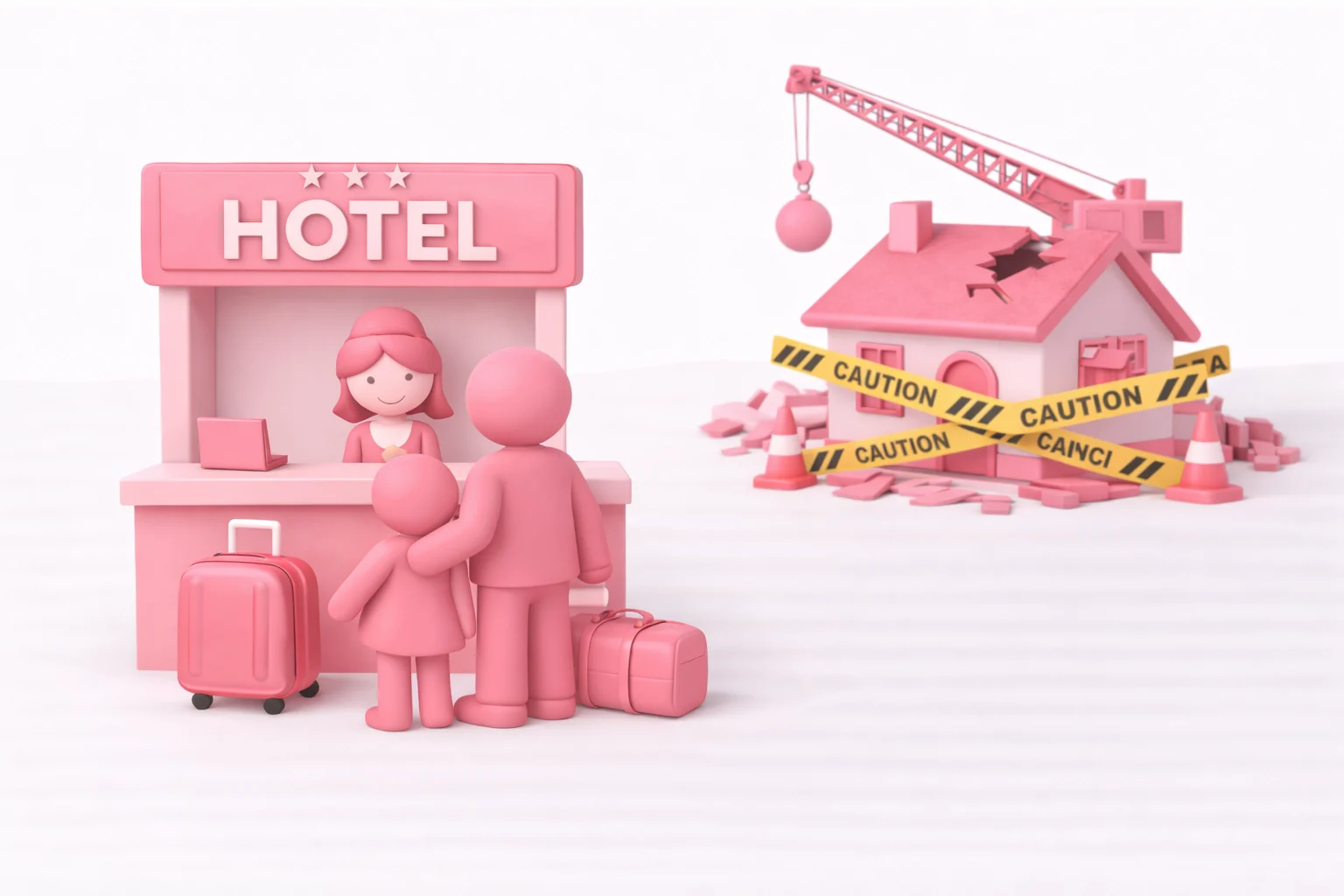


If something like a fire or storm forces you out of your home, loss of use coverage helps pay for a place to stay, meals and other daily expenses while repairs are being done.
Jerry has helped over 54,000 homeowners compare home insurance quotes to get the coverage that’s right for them, including loss of use. Here’s how it works and how much coverage you actually need.

Bundle home + car and save up to 40%.
What loss of use coverage pays for
Loss of use coverage, also called “Coverage D” or additional living expenses (ALE), helps you maintain your normal standard of living when you’re forced to live elsewhere after a covered event. Unlike other coverages, loss of use typically has no deductible; your insurer pays from the first dollar.
Keep in mind that standard homeowners insurance policies don’t cover earthquakes or floods, so these events wouldn’t trigger loss of use benefits unless you have separate coverage.
Loss of use covers the excess of what you normally spend. For example, If you typically spend $400 per month on groceries but eating out costs you $800 while you’re unable to stay at your house, your insurer would reimburse the $400 difference.
Hotel or rental housing, including apartments, extended-stay hotels or temporary rentals.
Restaurant meals, to the extent they exceed your normal food costs.
Storage fees, if you need to store furniture or belongings during repairs.
Moving expenses, including costs to move your belongings to and from temporary housing.
Pet boarding, if your temporary housing doesn’t allow pets.
Laundry services, if you don’t have access to a washer and dryer.
Extra transportation costs, like additional gas or parking fees if your temporary housing is farther from work.
Here’s an example of how loss of use coverage works.
Key takeaway: Loss of use coverage pays for the extra costs of living somewhere else when your home becomes uninhabitable after a covered event, like a fire.
Learn more: What does home insurance cover?
The three types of loss of use coverage
Loss of use coverage usually includes three distinct parts that work together:
🏨 Additional living expenses (ALE)
This is the most common type. ALE reimburses you for temporary housing, meals and other essential costs that exceed your normal expenses while your home is being repaired or rebuilt after a covered loss.
🏠 Fair rental value
If you rent out part of your home, like a basement apartment or spare room, and a covered loss forces your tenant to move out, fair rental value coverage compensates you for the lost rental income during repairs.
🚫 Prohibited use
If a civil authority orders you to evacuate due to a nearby disaster, like a wildfire, prohibited use coverage can reimburse your living expenses even if your home itself isn’t damaged. This coverage usually has a time limit, typically two weeks.
Why it matters: Understanding all three types helps you know exactly when your coverage kicks in. You don’t need direct damage to your home to use loss of use coverage; a mandatory evacuation can trigger it too.
How much loss of use coverage do you need?
Your loss of use coverage is typically set as a percentage of your dwelling coverage, usually between 20% and 30%.
To estimate how much you need, consider:
-
Local housing costs. What would it cost to rent a comparable home in your area for six months to a year?
-
Your family’s needs. Do you have pets, children in school or medical needs that could increase costs?
-
Potential repair timeline. Major damage can take months to repair, and you’ll need your coverage to last that long.
Some insurers also offer actual loss sustained coverage, which has no fixed dollar limit. It pays for the entirety of your additional living expenses for as long as you’re displaced.
Jerry recommends: If you live in a high-cost area or in a region with frequent natural disasters, consider asking your insurer about increasing your loss of use limits or choosing actual loss sustained coverage, which has no dollar cap.
Get fully covered with Jerry
Shopping for loss of use coverage doesn’t have to mean hours on the phone with different insurers. Jerry lets you compare quotes from multiple carriers in minutes, and you can buy your policy online without a single phone call.
Looking to bundle your home and car insurance? Jerry makes that simple too. You don’t even have to stick with the same carrier to get a bundling discount. With Jerry, you can mix and match between 100+ car insurance carriers and 12+ home insurers to get the best deal. And our licensed agents are just a chat away if you need help.
Mix and match with Jerry to build your perfect bundle.
What loss of use coverage doesn’t cover
Loss of use coverage is designed for additional expenses only. It won’t pay for costs you’d have anyway, or damage from things your policy excludes.
Loss of use coverage won’t pay for:
Your mortgage or rent. You’ll still need to pay your regular housing costs.
Property taxes and utility bills. Ongoing expenses for your property aren’t covered.
Wear and tear. Home insurance covers sudden damage, not belongings that break down over time or from regular use.
Flood damage displacement. Unless you have separate flood insurance, you won’t receive loss of use benefits if flooding makes your home uninhabitable.
Earthquake damage displacement. You’ll need earthquake insurance for this coverage to apply.
Elective renovations. If you choose to leave your home during a kitchen remodel, that’s not a covered loss.
Luxury upgrades. Coverage maintains your standard of living. It won’t pay for a five-star hotel if you normally live modestly.
Key takeaway: Loss of use only applies when you’re displaced by a covered peril. Floods and earthquakes don’t trigger this coverage unless you have additional policies.
When does your home qualify as uninhabitable?
Your loss of use coverage kicks in when your home is deemed uninhabitable or unfit to live in after a covered loss, like a burst pipe.
Your home is typically considered uninhabitable if:
-
You’ve lost essential utilities, like heat, electricity, plumbing or running water.
-
Structural damage makes it unsafe, such as a collapsed roof or compromised foundation.
-
Key rooms are inaccessible, like if fire damage prevents you from using your kitchen or bathrooms.
-
A civil authority orders evacuation, due to a nearby wildfire, gas leak or other emergency.
Why it matters: Before checking into a hotel, contact your insurance company to confirm if your situation qualifies. Getting approval upfront helps avoid reimbursement issues later.
Tips for filing a loss of use claim
If you need to use your loss of use coverage, following these steps can help ensure a smooth claims process.
📞 File your claim immediately.
Acura vehicles are powerful and performance-tuned, and at-fault accidents can be costly. Nearly half (46%) of Jerry Acura drivers choose higher-than-minimum coverage.
🧾 Keep all receipts.
Loss of use is paid on a reimbursement basis. Save receipts for everything – hotel bills, restaurant meals, gas, laundry, pet boarding and more.
📝 Document your normal expenses.
Your insurer will only reimburse the difference between your normal costs and your displacement costs. To establish your baseline, they’ll typically ask for past utility bills, bank statements or credit card records from before the event that forced you out of your home. For harder-to-document expenses like food or gas, insurers often accept reasonable estimates. Gathering past bills early can speed up the claims process.
✅ Verify expenses in advance.
Before booking a hotel or rental, check with your insurer to confirm the cost is reasonable. This helps avoid surprises when you submit for reimbursement.
Why it matters: Without proper documentation, your insurer may deny or lower your reimbursement. Treat every expense as if you’ll need to prove it.
Compare home + car bundles in one place, all online.
faq
- 🏠 What is loss of use coverage in home insurance?
- 💰 How much loss of use coverage do I get?
- 🏨 Does loss of use coverage pay for a hotel?
- 🧾 Do I need to save receipts for loss of use claims?
- 💵 Does loss of use have a deductible?
- 🏦 Does loss of use coverage pay my mortgage?
- ⏱️ How long does loss of use coverage last?
- 🌊 Does loss of use cover flood damage?
- 🌋 Does loss of use cover earthquake damage?

Ben Moore is a writer and editor at Jerry and an auto insurance expert. He previously worked as a writer, editor and content strategist on NerdWallet’s auto insurance team for five years. His work has been published in The Associated Press, Washington Post, Chicago Sun-Times, MarketWatch, Nasdaq and Yahoo News. He also served as a NerdWallet spokesperson, with appearances on local broadcast television and quotes in Martha Stewart and Real Simple magazine.
Ben has an extensive background in digital marketing, working on affiliate and programmatic advertising campaigns for brands like Cabela’s, H&R Block and Sears. He holds a bachelors degree in marketing from Olivet Nazarene University.