

Roadside assistance is a service that helps you when your car breaks down, whether you need a tow, a battery jump-start, a flat tire change, fuel delivery or help getting back into a locked car. You can get roadside assistance as an add-on to your car insurance policy for a few dollars a month, or through a standalone membership plan like AAA. In 2024, AAA received over 27 million emergency roadside service calls across the United States, according to AAA, with towing and battery problems making up roughly 74% of those calls.
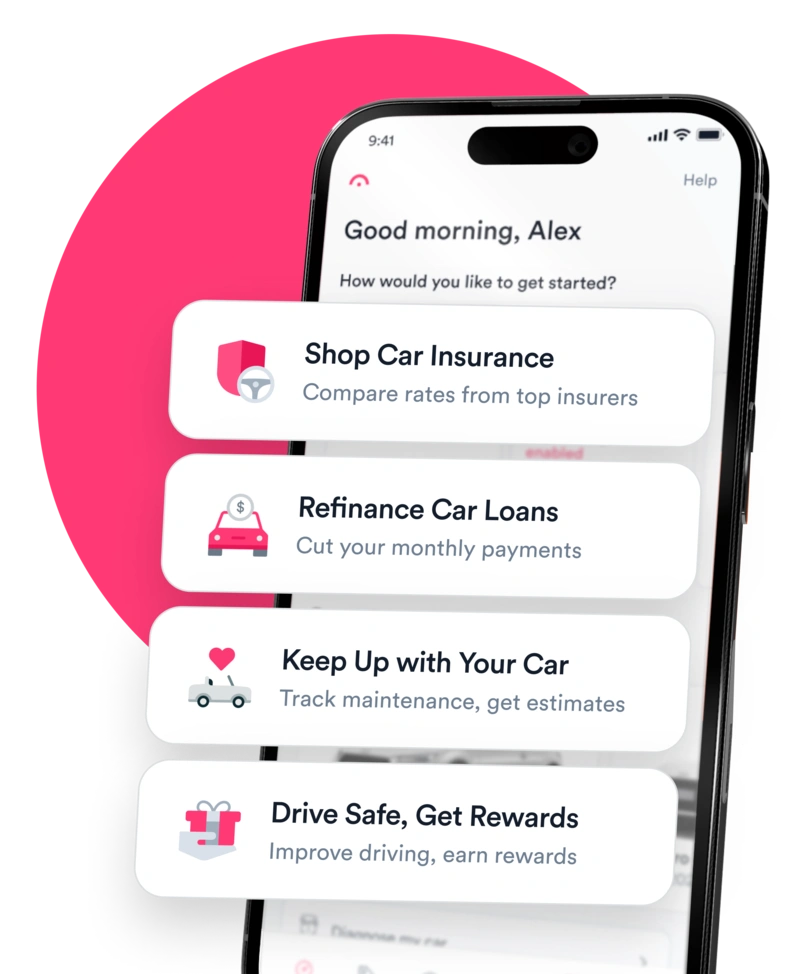
Jerry has helped 1,199,303 drivers compare car insurance quotes, including for policies that include roadside assistance coverage, making it easy to find protection that fits your budget.
Jerry pulls up to 20 quotes from top rated carriers.
What is roadside assistance?
Roadside assistance is a service designed to help you when your car has a breakdown not related to an accident. It covers the most common problems drivers face on the road, like dead batteries, flat tires and running out of gas. You can add roadside assistance to your car insurance policy for a small monthly fee, or you can buy a standalone membership from a provider like AAA.
According to the Texas Office of Public Insurance Counsel, roadside assistance generally covers services to get your car back to driving condition. Here is what a typical roadside assistance plan includes:
Key takeaway: Roadside assistance covers towing, battery jump-starts, flat tires, fuel delivery, lockouts and winching to help you get back on the road after a breakdown.
Do I need roadside assistance?
Not every driver needs roadside assistance, but for most people, it provides peace of mind for a very low cost. Here is a quick guide to help you decide.
| Recommendation | Your situation |
|---|---|
| Yes, get it | You commute long distances or take frequent road trips.Your car is older than five years or has more than 75,000 miles.You don’t feel comfortable changing a tire or jump-starting a battery yourself.You live in an area with extreme weather like heavy snow, ice or heat.You are a new or teen driver. |
| Maybe | Your car is newer and still under a manufacturer’s roadside assistance warranty.You have a credit card that includes roadside benefits.You mostly drive short distances in urban areas. |
| Probably not | You already have roadside coverage through another source and don’t want to pay for duplicate coverage.You have the tools, knowledge and confidence to handle common breakdowns yourself. |
Key takeaway: Roadside assistance is worth it for most drivers. It costs very little and could save you hundreds on a single tow or lockout.
What does roadside assistance cost?
A car insurance policy that includes roadside assistance typically costs between $100 and $333 per month, according to Jerry’s data, or $38 to $164 per year for a standalone membership like AAA. Either way, it is one of the most affordable coverages you can add to protect yourself from the cost of an unexpected breakdown.
Without roadside assistance, a single tow can cost $75 to $125 for a short local trip, and the price climbs quickly from there. Per-mile towing rates range from $2.50 to $7.00, so a 50-mile tow could cost $250 or more out of pocket.
| Insurance add-on | Standalone membership | |
|---|---|---|
| Who is covered | The vehicle listed on the policy. | The member, in any vehicle. |
| Towing distance | Varies by insurer. Often to nearest repair shop only. | 5 to 200 miles depending on plan tier. |
| Trip interruption | Sometimes included as an add-on. | Included in higher-tier plans. |
| Extra perks | Integrated with your existing policy and claims process. | Travel discounts, hotel and rental car deals, DMV services. |
What drives the cost of roadside assistance as an insurance add-on varies by insurer, but common factors include your location, the type of vehicle you drive and the towing distance limits you choose.
Key takeaway: Roadside assistance costs as little as $5 per year through your car insurance. Without it, a single tow could cost you $125 or more out of pocket.
How to get roadside assistance with Jerry
Getting roadside assistance coverage doesn’t need to be complicated. Jerry makes it easy to compare quotes that include roadside assistance from over 100 insurance companies.
- Compare quotes from 100+ carriers in minutes. Answer a few quick questions and Jerry pulls up side-by-side quotes that can include roadside assistance coverage.
- Customize limits, deductibles and add-ons. You can choose to add roadside assistance to see how it affects your total premium. Preview your savings.
- Bind coverage in-app with no lapse between policies. Jerry handles the switch and can even cancel your old policy. You can reshop at renewal to make sure you still have the right price.
Roadside assistance through your car insurance vs. a standalone plan
There are two main ways to get roadside assistance: adding it to your car insurance policy or buying a standalone membership. Both will get you help when you break down, but they work differently.
Insurance add-on: When you add roadside assistance to your car insurance, coverage is tied to the vehicle listed on your policy. It is billed as part of your premium and typically costs $5 to $30 per year. If you need a tow, the insurer sends a service provider and covers the cost up to your policy limits.
Standalone membership: Plans like AAA, Good Sam and others cover the member, not the vehicle. That means you can use your membership whether you are driving your own car, a rental or riding as a passenger. Pricing ranges from about $38 to $164 per year depending on the tier and provider.
Which option is right for you?
| Choose an insurance add-on if: | Choose a standalone plan if: |
|---|---|
| You want the cheapest option. | You want coverage that follows you, not your car. |
| You only need coverage for your own car. | You frequently rent or borrow vehicles. |
| You prefer a single bill for all your car insurance. | You value extra perks like travel discounts. |
Some drivers have both. If your car insurance includes basic roadside assistance with limited towing, a standalone plan with longer towing distance can fill the gap.
Jerry recommends: An insurance add-on is the most affordable way to get roadside assistance and you can quickly compare quotes with roadside assistance in the Jerry app.
What roadside assistance covers and what it doesn’t
Roadside assistance is designed for non-accident breakdowns. If you are in a car accident, that is handled by your comprehensive or collision coverage, not your roadside assistance plan.
| Typically covered | Typically not covered |
|---|---|
| Towing to the nearest repair facility. | Accident-related towing or repairs. |
| Battery jump-starts. | The cost of fuel, tires or a new battery. |
| Flat tire changes with your spare. | Off-road recovery in remote areas. |
| Fuel, oil or fluid delivery. | Routine maintenance or mechanical repairs. |
| Lockout assistance. | Towing beyond your plan’s distance limit. |
| Winching from a ditch or mud near a road. | Commercial vehicle breakdowns on most personal plans. |
It is also worth noting that most roadside assistance plans limit the number of service calls you can make per year. AAA, for example, allows four calls per membership year. Insurance-based plans vary by carrier, so check your policy.
Why it matters: Knowing what your roadside assistance does and doesn’t cover helps you avoid surprises when you need help most. Review your plan’s limits before you are stuck on the side of the road.
How to use roadside assistance when you need it
If your car breaks down, here is what to do:
1. Get to a safe spot. Pull over as far off the road as possible. Turn on your hazard lights and stay inside your car if you are on a busy highway.
2. Call your roadside assistance provider. Use your insurance company’s app, call the number on the back of your insurance card or call your standalone membership provider. Many insurers now let you request help through their mobile app.
3. Describe the problem. Let the dispatcher know your exact location, what happened and what kind of help you need. The more detail you give, the faster they can send the right service.
4. Wait for help to arrive. A service provider will be dispatched to your location. Average response times vary, but most urban areas see help within 30 to 60 minutes.
Key takeaway: When you break down, get safe, call for help and describe the problem clearly. Having your roadside number saved in advance makes the process faster.

It only takes 2 minutes to sign up at Jerry.
faq
- How much does roadside assistance cost through car insurance?
- Does roadside assistance cover towing?
- Does roadside assistance help if I lock my keys in my car?
- Will using roadside assistance raise my car insurance rates?
- Is roadside assistance through my car insurance or AAA a better deal?
- Does my new car come with free roadside assistance?
- Can I get roadside assistance if I don’t have car insurance?
Methodology
Statistics, rates and conclusions in this article are based on Jerry’s proprietary database of real-world car insurance quotes, not third-party models or estimates. As a licensed insurance broker in all 50 states, Jerry has firsthand visibility into how quotes are generated and validated, and all data is aggregated and anonymized to protect privacy.
With millions of quotes delivered each year (often multiple offers per driver), our datasets are large enough to avoid bias toward any one region, insurer or driver type. Unless otherwise indicated, quotes shown are from drivers with clean records in the last 12 months. Quotes involving accidents, violations or credit use the last 18 months to ensure a reliable sample.
Editorial integrity
We’re all about balanced, unbiased and helpful content at Jerry. None of our articles are sponsored by advertisers or insurance companies, so you can trust the information we provide. As a comparison platform that works with 100+ insurers, Jerry has no reason to favor one insurer over another. Our job is to help you find the best fit for your situation.
Read Jerry’s car insurance data methodology to learn more about how we collect, verify and share real-world insurance data.

Ben Moore is a writer and editor at Jerry and an auto insurance expert. He previously worked as a writer, editor and content strategist on NerdWallet’s auto insurance team for five years. His work has been published in The Associated Press, Washington Post, Chicago Sun-Times, MarketWatch, Nasdaq and Yahoo News. He also served as a NerdWallet spokesperson, with appearances on local broadcast television and quotes in Martha Stewart and Real Simple magazine.
Ben has an extensive background in digital marketing, working on affiliate and programmatic advertising campaigns for brands like Cabela’s, H&R Block and Sears. He holds a bachelors degree in marketing from Olivet Nazarene University.