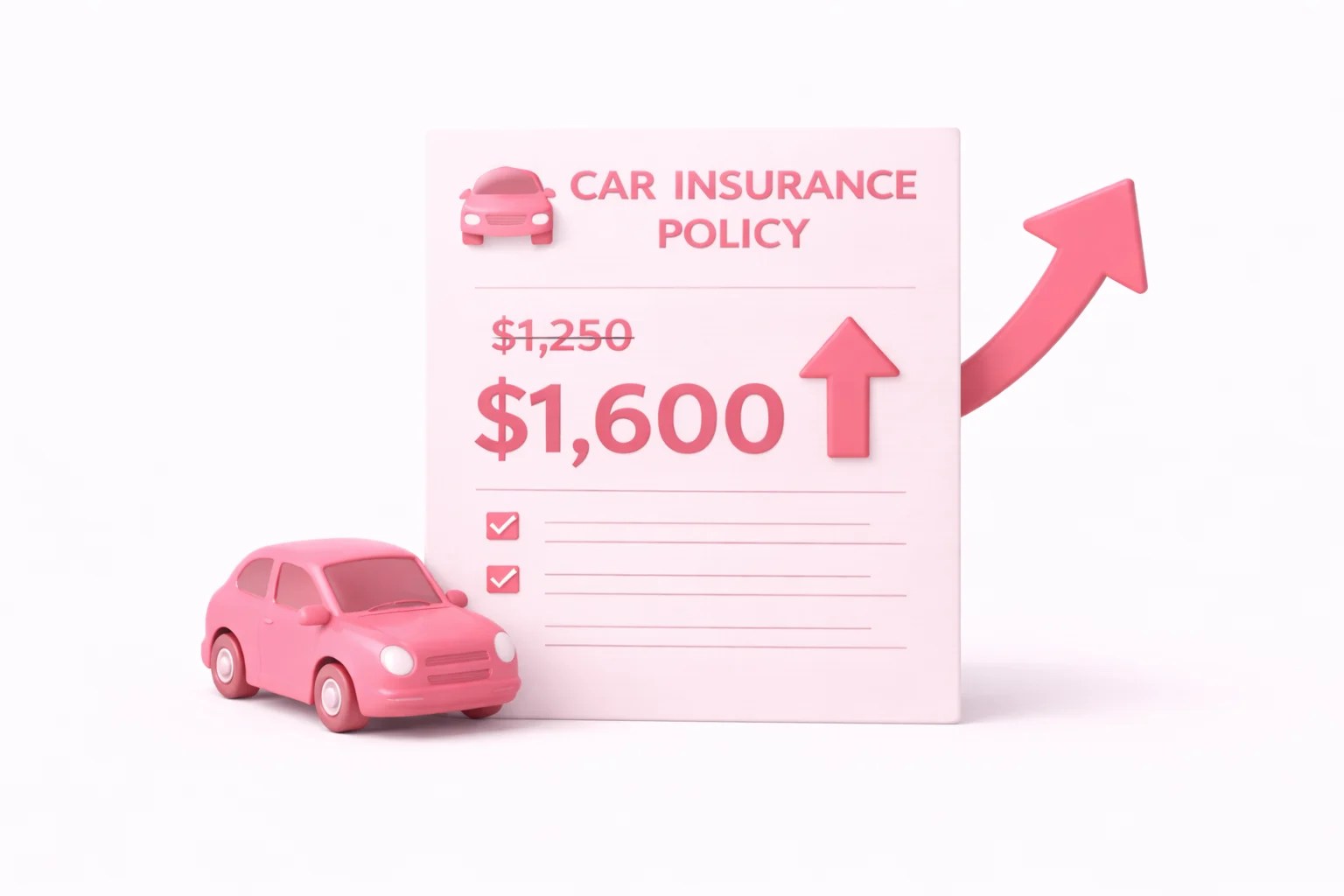

If you’ve recently been surprised by an increase in your car insurance premium, you’re not alone. Car insurance costs have risen consistently over the last few years, up over 50% since 2020 according to the Bureau of Labor Statistics, even affecting drivers with clean records and no claims.
Jerry has helped 1,192,858 drivers compare car insurance quotes, typically finding them coverage between $183 to $400 per month. Here’s why your car insurance may have gone up, what you can do about it and how much you could save by shopping with Jerry.
Jerry pulls up to 20 quotes from top rated carriers.
Top reasons your car insurance went up
Insurance companies increase rates based on a combination of personal and market-wide factors. Here are some of the most common reasons your premium may have gone up.
Rising repair and replacement costs
The average car repair cost reached over $4,730 in 2024, according to a report from CCC Intelligent Solutions. Many modern cars,like electric cars, now use advanced driver-assistance systems (ADAS) which include high-tech cameras, sensors and radar. While this makes cars safer to drive, they’ve become much more expensive to repair.
Tariffs on imported car parts have further inflated repair bills, and the impact is especially noticeable for European and Asian vehicles that rely on precision-engineered parts built overseas.
Fatal car accidents
Despite improvements in car safety technology, traffic fatalities have increased over the last few years. When car insurance claims are frequent and expensive, insurers raise rates to keep up.
The National Highway Traffic Safety Administration (NHTSA) estimates that 39,345 people died in car accidents in 2024, but the trend seems to be reversing, as the NHTSA estimates that there was around a 6.4% decrease in traffic crashes in the first nine months of 2025 compared to the same time period in 2024.
Inflation
Car insurance prices reflect the continued rising costs of medical care, car parts, and labor and legal fees. The consumer price index for car insurance has increased every year, but has seen drastic increases since 2020, though there was a slight decrease in January 2026.
Weather
Severe weather doesn’t just affect home insurance. Hurricanes, hailstorms and flooding destroy cars, too. And according to Insurance Business, the frequency and cost of weather disasters affecting the insurance industry have accelerated over the last decade.
Changes to your personal driving profile
Changes in your own life can result in a rate increase.
Common examples include:
-
Getting into an accident. If you cause a crash, your rates will typically go up. But even if you’re not at fault, you might still see an increase. That’s because filing a claim after an accident – even if it’s not your fault – signals to insurers that you may be more likely to file again.
-
Filing a claim. Your car insurance rates usually increase after you file a claim because companies believe you’ll be more likely to file again in the future.
-
Getting a ticket. A speeding ticket or other moving violation on your motor vehicle report can signal to an insurer that you’re riskier to insure, resulting in a higher premium.
-
A lower credit score. In most states, insurers use credit-based insurance scores to set rates. A drop in your score in those states typically means your rate will go up, sometimes significantly.
-
New address. Your ZIP code is a big factor in what you pay, because insurers use local data – like accident rates, theft statistics and weather patterns – to assess risk in your area. If you move from a rural area to an urban neighborhood with more traffic, theft or car insurance claims, your carrier will raise your rates.
-
Adding a driver to your policy. Adding a teen driver or someone with a less-than-perfect record to your policy can increase your rate, sometimes significantly. According to the Insurance Information Institute, adding a teen can increase a family’s car insurance premium by roughly 50% to 100%, or more.
Learn more: Why is my car insurance so high?
Key takeaway: Car insurance rates are determined by a mix of personal and market-wide factors. Even if nothing in your life changed, rising repair costs, inflation and severe weather could still push your premium higher.
Find a lower rate with Jerry
If your car insurance went up, Jerry makes it easy to find affordable car insurance. Our customers save an average of 63% after shopping with Jerry. You can compare personalized quotes from 50+ insurers in minutes and all online, with a real licensed agent available to help if you have any questions.
You could also find savings by bundling your car and home insurance together. Jerry lets you quickly compare bundling quotes, plus you can mix and match policies from different carriers to find the best combination of coverage and price.
What you can do about a rate increase
You can’t control inflation or weather, but you can still take steps to lower your premium. Here’s what we recommend to Jerry customers who want to find a better deal.
💰 Raise your deductible
Increasing your deductible can lower your premium, just make sure you can comfortably pay the higher deductible if you need to file a claim.
🏷️ Ask about discounts
You might not be taking advantage of all the discounts available to you. Common ones include savings for being a safe driver, insuring a good student, taking a defensive driving course, paying-in-full and signing up for paperless billing. If you shop with Jerry, we’ll find all discounts you qualify for and add them to your policy.
🔍 Review your coverage
If you’re driving an older car, you may not need comprehensive and collision coverage. Dropping these coverages on a car that’s worth less than a few thousand dollars can save you money. However, avoid lowering your liability insurance limits. If you’re unsure of how much coverage you should add, read our breakdown of how much car insurance you need.
📈 Improve your credit
In most states, your credit-based insurance score has a major impact on your premium. While not a quick fix, paying down debt, making on-time payments and correcting errors on your credit report can help lower your rate over time.
Key takeaway: You can’t avoid premium increases entirely, but raising your deductible, claiming all available discounts, adjusting coverage on older vehicles and improving your credit score can help keep rates lower.

It only takes 2 minutes to sign up at Jerry.
faq
-
💰 Why did my car insurance go up for no reason?
-
📈 How much has car insurance gone up?
-
🚗 Will my car insurance go down if I switch companies?
-
✅ Can I lower my car insurance without switching companies?
-
📅 How often should I shop for car insurance?
-
🏠 Does bundling home and car insurance actually save money?
-
🔍 Does my credit score affect my car insurance rate?

Ben Moore is a writer and editor at Jerry and an auto insurance expert. He previously worked as a writer, editor and content strategist on NerdWallet’s auto insurance team for five years. His work has been published in The Associated Press, Washington Post, Chicago Sun-Times, MarketWatch, Nasdaq and Yahoo News. He also served as a NerdWallet spokesperson, with appearances on local broadcast television and quotes in Martha Stewart and Real Simple magazine.
Ben has an extensive background in digital marketing, working on affiliate and programmatic advertising campaigns for brands like Cabela’s, H&R Block and Sears. He holds a bachelors degree in marketing from Olivet Nazarene University.