This report was originally published in January 2023 and is being made available online in 2026 for archival reference; it was previously available only in PDF form. The data, statistics and predictions reflect the state of the American driver as of late 2022 — a period shaped by lingering pandemic-era supply shortages, record-high gas prices and the strongest inflation in four decades — and have not been updated since the original publication date.
For our most recent findings, see the 2026 State of the American Driver Report.
Executive summary: A second pandemic-era year of stretched budgets
In 2022, American drivers navigated a second full year of the new economic landscape that has defined the COVID-19 era so far: supply-chain disruptions, shortages of new vehicles, soaring used-car prices and higher interest rates meant to tame the strongest overall inflation in decades. The bottom line was that Americans were forced to stretch their budgets even thinner in 2022, and the cost of car ownership was a big reason why.
In compiling the 2023 State of the American Driver report, Jerry surveyed more than 1,200 drivers from all 50 states and across generations. This year’s report offers key insights into Americans’ preferences when buying and selling cars, the financial burden many must take on to own a car, their attitudes toward electric vehicles (EVs), their commuting habits, and their views on road safety.
At Jerry, our mission is to make it really easy for drivers to save time and money on car insurance and other expenses. This annual report is a product of our commitment to explore the economic, informational, and safety challenges facing drivers. Millions of customers used Jerry to search for car insurance savings in 2022.
Key insights: The headlines from this year’s data
The 2022 data tells a story of constraint: drivers settling for vehicles they didn’t want, falling behind on bills, going without coverage and, in a year of record gas prices, turning toward EVs in unprecedented numbers. A few of the findings that stood out most:
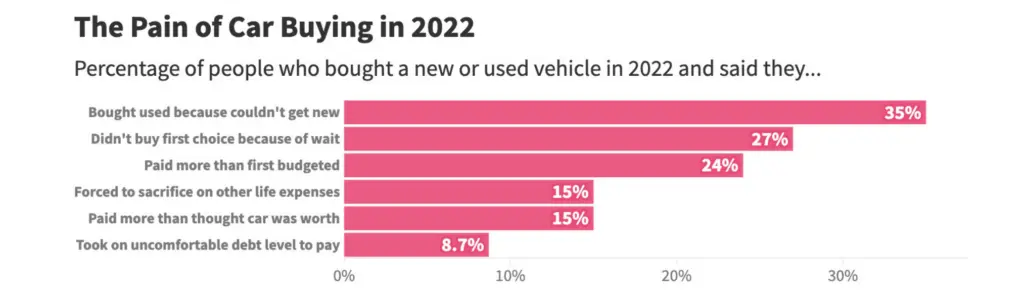
- 35% of 2022 buyers ended up buying used because they couldn’t get new.
- 49% of drivers are interested in an EV as their next vehicle, up from 39% in 2021.
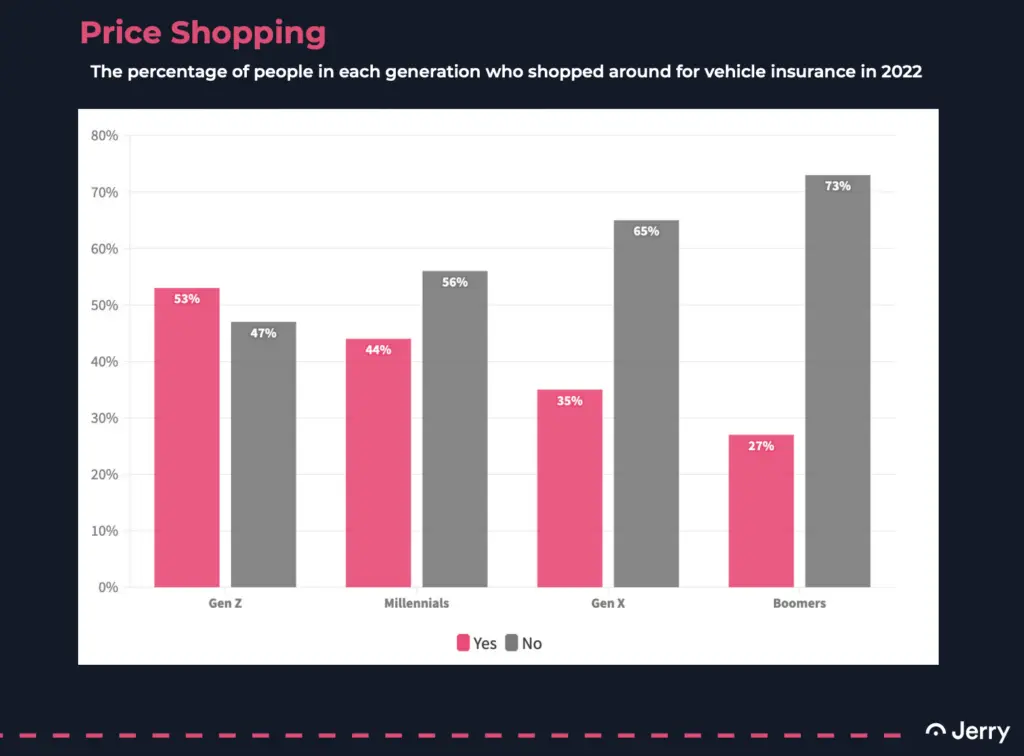
- 63% of American drivers didn’t shop around for car insurance in 2022.
- 31% say driving has become more dangerous since COVID.
- 2 in 3 say a brand other than Tesla would now be their first EV choice.
- 25% of respondents fell more than 30 days behind on a debt or rent payment.
Buying and selling: Another tough year for car buyers
It was another year of limited, often-painful choices for car buyers in 2022 as the effects of the pandemic-driven supply-chain disruptions lingered. The effects included a shortage of new vehicles, long wait times for the new models that did eventually arrive at dealerships, and dramatically higher prices for used cars as many buyers were left with little choice but to walk away from the new-car market.
The pain of car buying in 2022
Among Americans who bought a vehicle last year, more than a third had to settle for used because new wasn’t available, and a quarter ended up with a make or model that wasn’t their first choice. Many also paid more than they planned, or more than they thought the car was worth.
2023 outlook
Those conditions drove away many would-be buyers entirely. Only 9% of American drivers reported buying their vehicle in 2022, versus 11% in 2021 and 12% in 2020. Nearly two-thirds (63%) of those who backed away cited high vehicle prices as one reason, while 25% said they couldn’t find a vehicle they liked and 22% said interest rates were too high.
Still, a third of American drivers have bought or leased a car since 2020, and half have done so in the past five years. Members of Gen Z, born since 1997, have been the most active buyers since the outbreak of COVID. 44% of Gen Z have bought or leased a vehicle since 2020, with 19% doing so in 2020 alone — up from 7.8% in 2019, suggesting that rock-bottom interest rates and government stimulus checks played a role in getting many young people into cars.
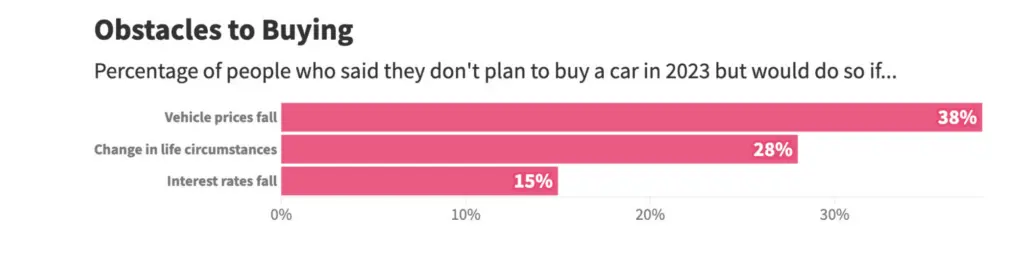
Looking ahead, 24% of American drivers said they intend to shop for a car in 2023, while 49% said they don’t plan to do so at all. Of those who don’t plan to shop, high vehicle prices and interest rates were among their biggest concerns.
How buyers want to shop
The struggles of online car retailer Carvana have raised questions about the viability of online platforms. But there is strong interest in buying online, particularly among younger generations. While a majority of Americans (61%) who plan to buy a vehicle in 2023 still prefer to buy at a traditional dealership, nearly a third said they prefer an online platform like Carvana, Cars.com, CarMax or Autotrader.
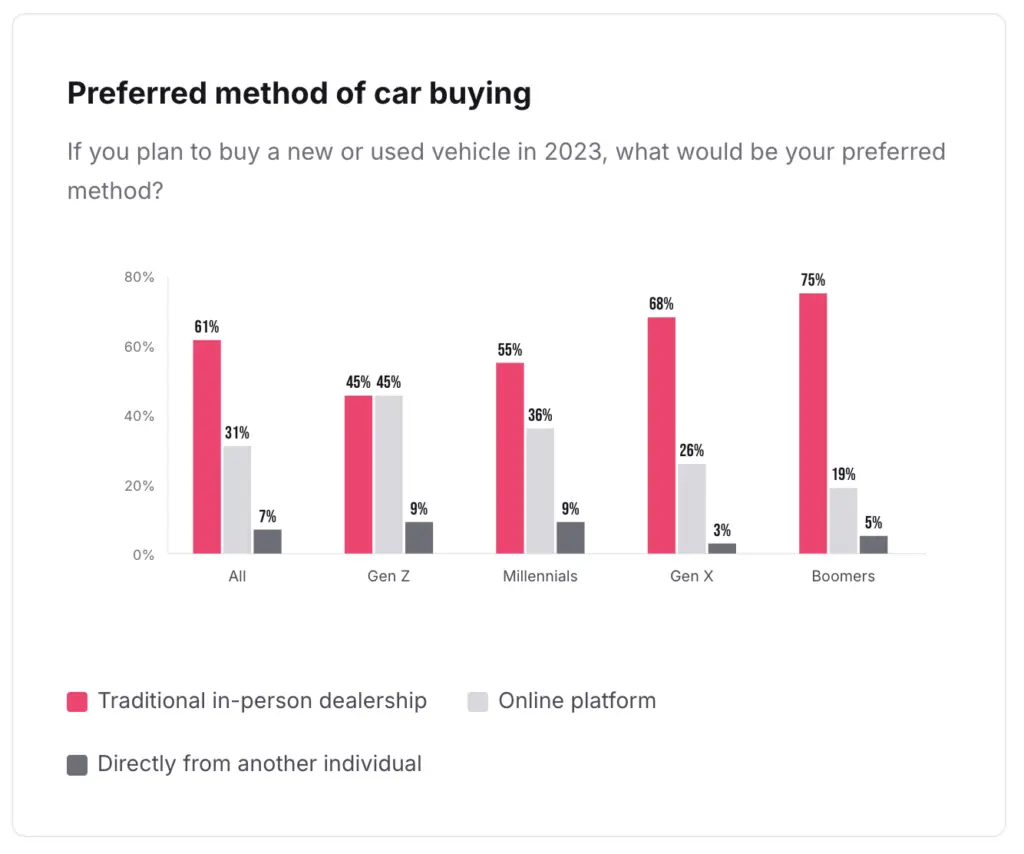
Generational divide: Online retailers found the most support among Gen Z, with 45% saying they preferred them and 45% choosing a traditional dealership — an even split. Only 19% of Baby Boomers said they preferred online platforms, while 75% chose traditional dealerships.
Cost of ownership: Pinched budgets and missed payments
Many Americans struggled with the cost of car ownership even before COVID. While vehicle prices had remained remarkably flat for years — even lagging growth in household incomes — soaring prices for health care, housing, and food left less money for car payments and other ownership costs like gas, maintenance and repairs, and insurance.
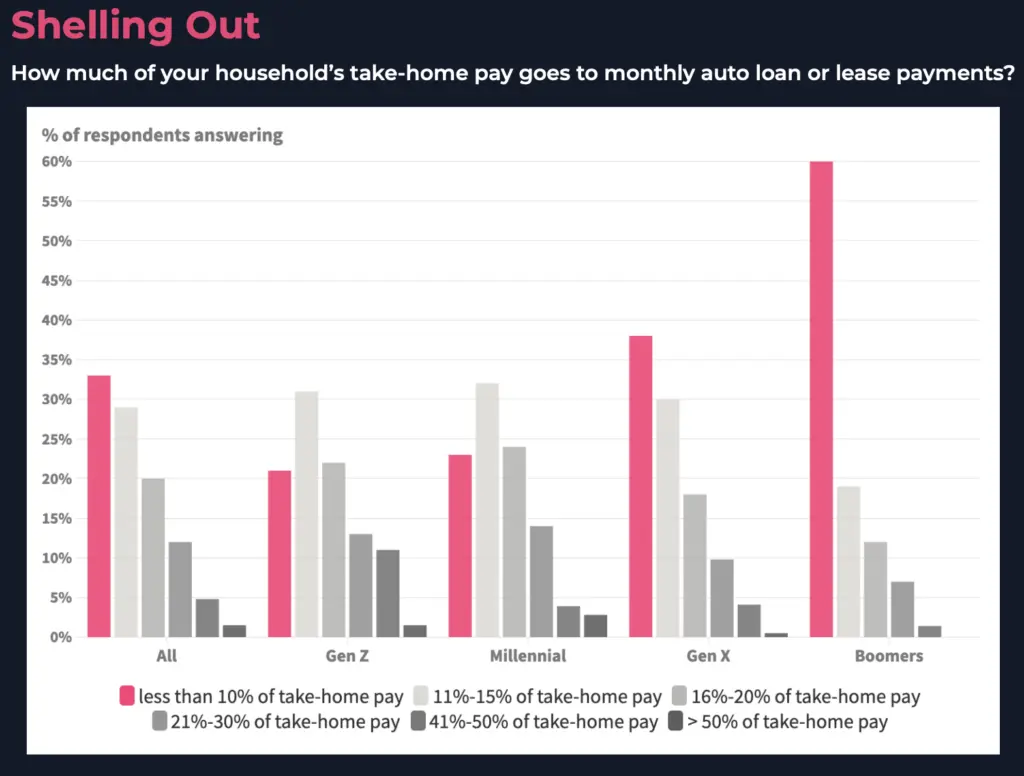
Pandemic-era vehicle price increases have added to those struggles. Financial advisers generally say you shouldn’t spend more than 10–15% of your after-tax income on a car payment. But in 2022, nearly a quarter of American drivers (23%) spent more than 15% of their after-tax household income on car loan or lease payments. One in ten paid more than 20%.
Falling behind: A quarter of respondents said car ownership costs made them more than 30 days late on at least one debt or rent payment in 2022. The number was much higher for younger generations: 53% of Gen Z and 33% of Millennials reported falling behind.
How much of take-home pay goes to car payments
The generational split is stark. Boomers, many of whom own their cars outright, overwhelmingly spend less than 10% of take-home pay on auto loans or leases. Gen Z and Millennials are clustered in the 11% to 20% range, with many paying even more.
What gets cut to keep up
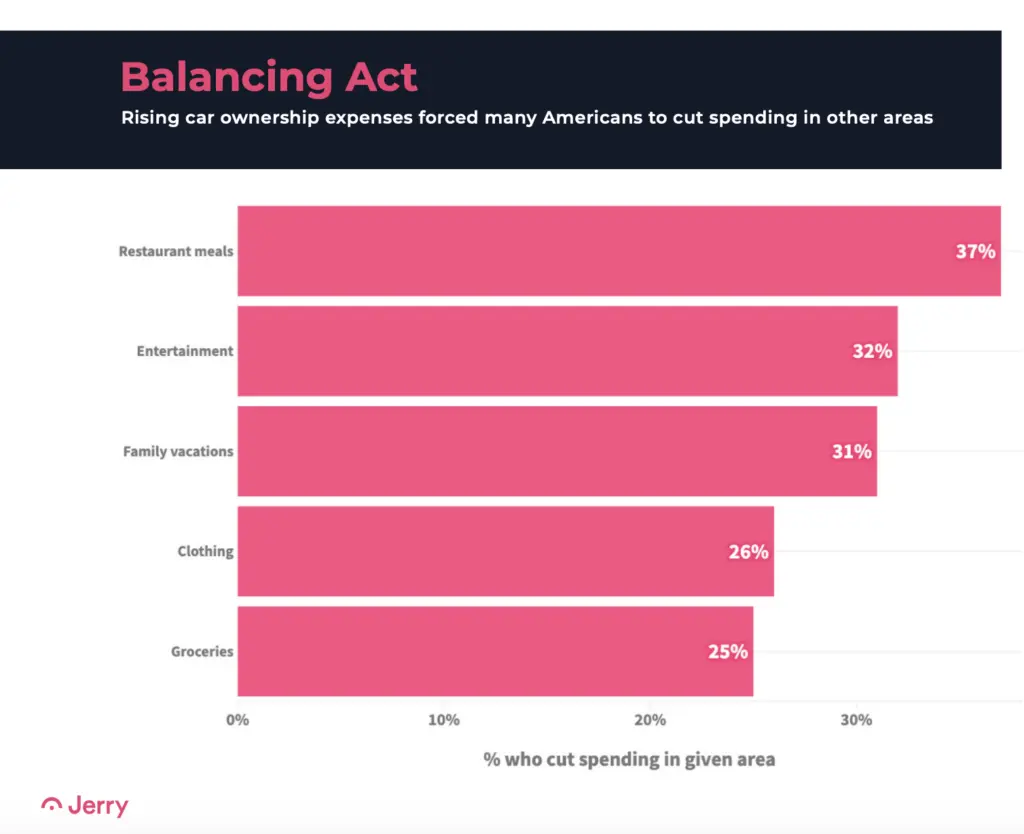
Rising car ownership expenses forced many Americans to cut spending in other areas. The casualties weren’t just discretionary luxuries — a quarter of respondents said they cut back on groceries.
The hidden cost: insurance
Despite the surge in used car prices over the past couple of years, no car-related expense has risen more over the past decade than insurance. Nearly a quarter (23%) of American drivers said they took out less coverage than they wanted in 2022 because of rising premiums. Younger generations were hit harder: half of Gen Z and 31% of Millennials said they were forced to sacrifice coverage to afford their payments.
Yet 63% of American drivers did not shop around for car insurance in 2022. Younger generations were more likely to do so than Gen X and Boomers; a majority of Boomers (58%) and about half of Gen X (49%) have had their current car insurance policy for more than five years.
Electric vehicle outlook: Record gas prices push EVs into the mainstream
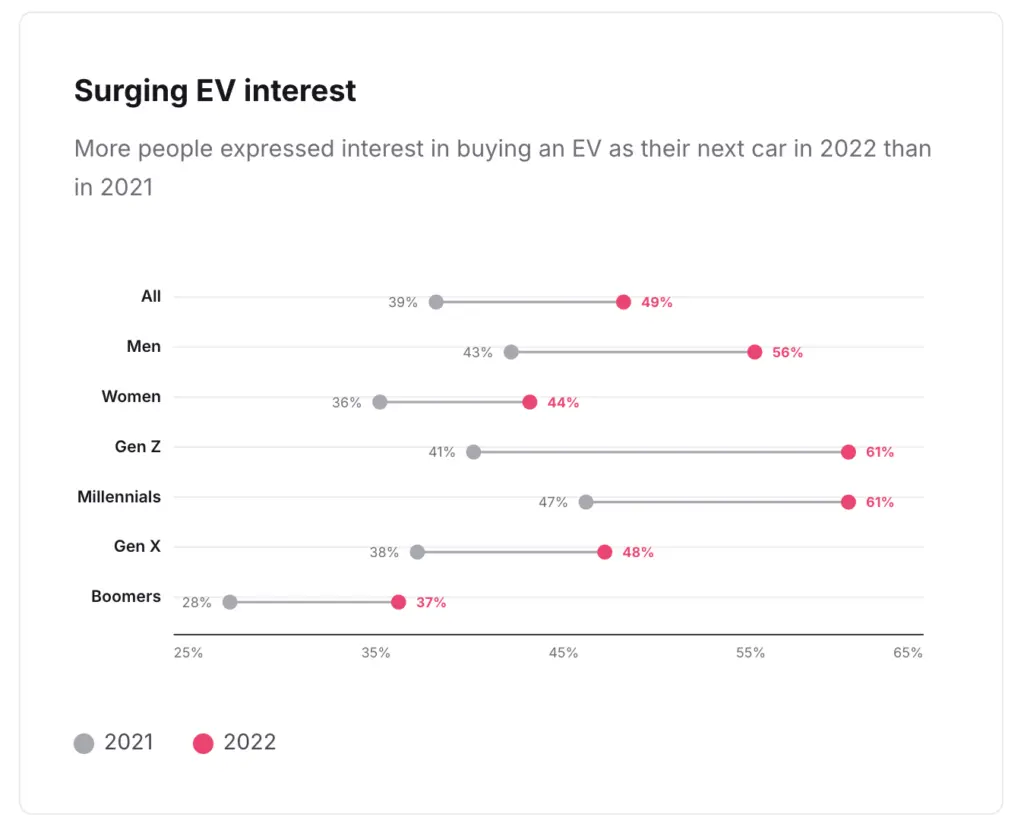
Perhaps no event in 2022 signaled the potential of EVs to go mainstream in the U.S. more than the introduction of an EV version of America’s best-selling pickup truck, the Ford F-150 Lightning. But while the Lightning turned plenty of heads, months of record-high gas prices did more to generate growing interest in EVs than anything else in 2022. About half (49%) of American drivers say they’re interested in an EV as their next vehicle, up from 39% a year earlier.
Surging EV interest
The jump was broad-based, but Gen Z and Millennials drove the biggest gains. Interest among both groups rose roughly 14 to 20 percentage points in a single year.
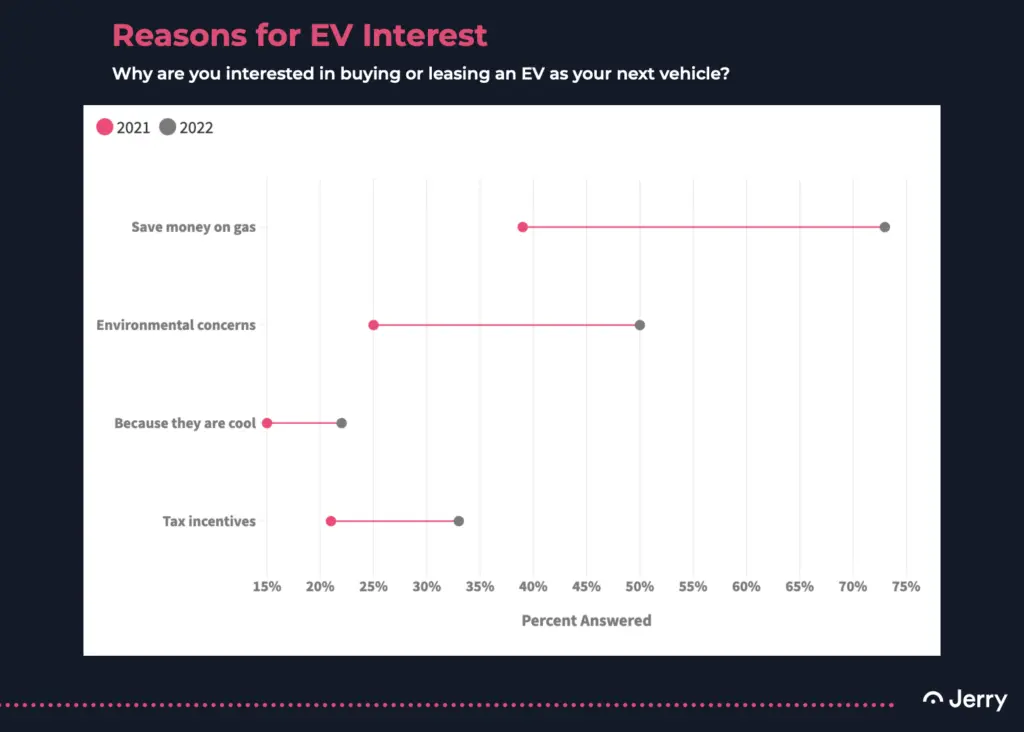
Why people are interested
It wasn’t just gas prices, though. Compared with 2021, more people also cited concerns about the environment, new tax incentives and EVs being “cool” as reasons for their interest. By generation, 66% of Boomers cited concerns about the environment, versus 49% of Gen X, 47% of Millennials and just 35% of Gen Z. On the other hand, 44% of Gen Z cited the cool factor, versus 29% of Millennials, 14% of Gen X and just 7% of Boomers.
Generational paradox: Curiously, 38% of Boomers answered that “most cars will be EVs soon” — compared to just 15% of Gen Z and 21% of Millennials. Perhaps that’s because Boomers have seen more mass adoption of cutting-edge technology over their lifetimes.
Who’s holding back and why
Still, 32% of all American drivers said they don’t expect to ever drive an EV, and nearly half (47%) of the 51% who said they weren’t interested in an EV as their next car simply preferred gas-powered vehicles. Other top concerns: the inconvenience of charging (53%), high vehicle prices (52%), and limited driving range between charges (47%).
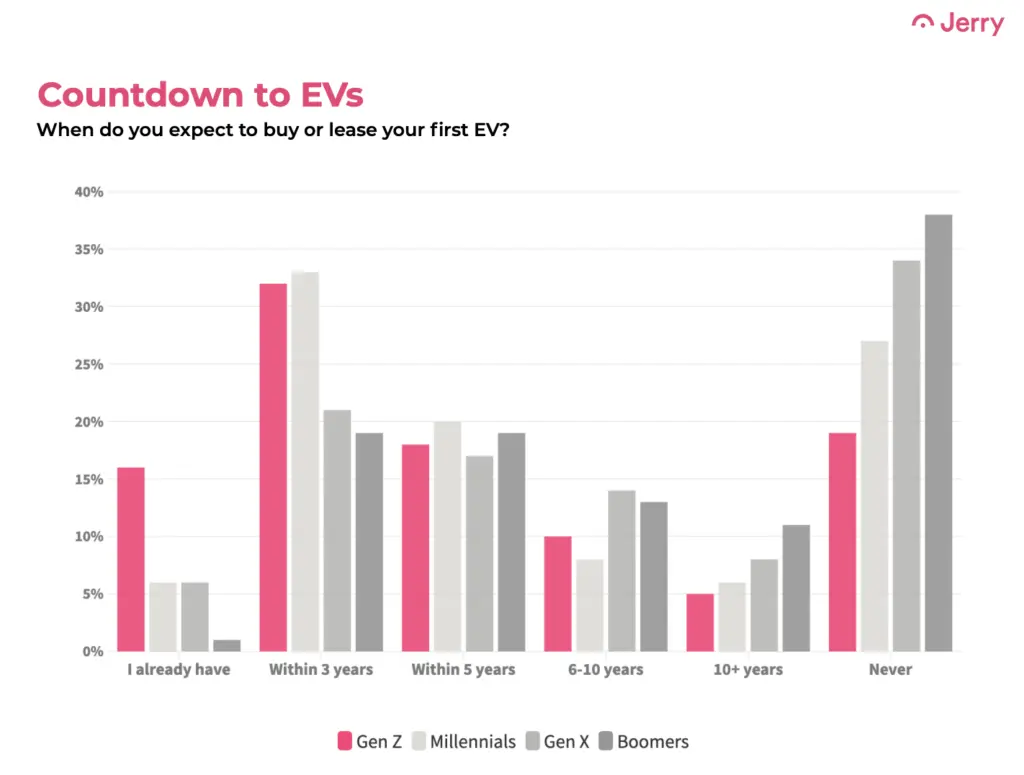
When will EV fans actually buy their first one? Six percent of American drivers said they already have one, 25% said within the next three years, and 19% within the next five. Gen Z are the earliest adopters: 16% already have an EV and 32% plan to get one within three years.
Tesla still leads — but its grip is slipping
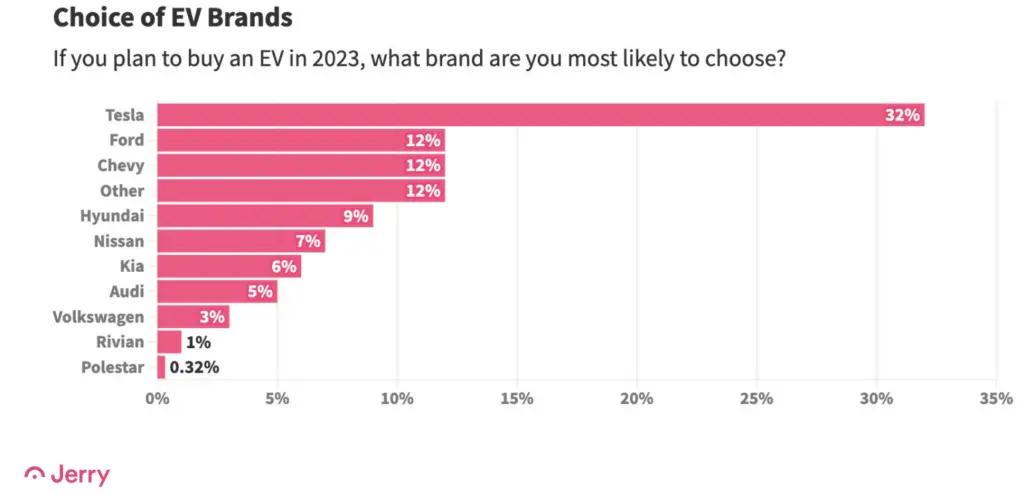
Tesla accounted for 68% of EV registrations in the U.S. during the first half of 2022, so it is clearly still the hottest brand in the EV market. But its market share has been sliding: about two-thirds of American drivers now say another brand would be their first choice. Ford, Chevrolet and Hyundai are the top picks after Tesla.
Driver safety: Roads feel more dangerous — and they are
The number of people killed in traffic accidents in the U.S. has jumped dramatically since the outbreak of COVID, rising 18% from 2019 to 2021 as speeding and reckless driving became more common. Meanwhile, the number of road rage shootings has doubled in recent years, and 35 states now allow residents to carry loaded handguns in their cars without any special permit or formal training. It all adds up to growing risks and uneasiness on the road.
Witnessing road rage
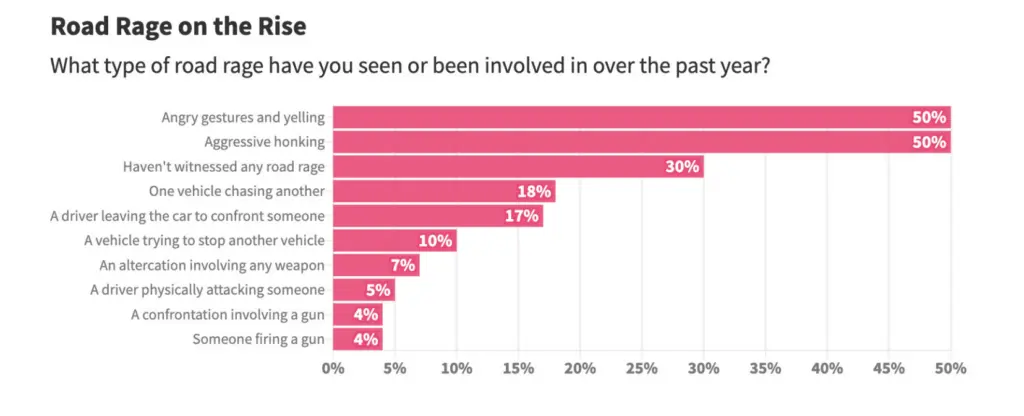
Drivers feel the shift. Nearly one third of American drivers (31%) say driving has become more dangerous since COVID, including 41% of Gen Z respondents. Nearly one in five (18%) say they witnessed one vehicle chase another over the past year, and 17% say they saw a driver leave their vehicle to confront someone. Four percent witnessed someone firing a gun in a road rage incident.
Loaded weapons in the car
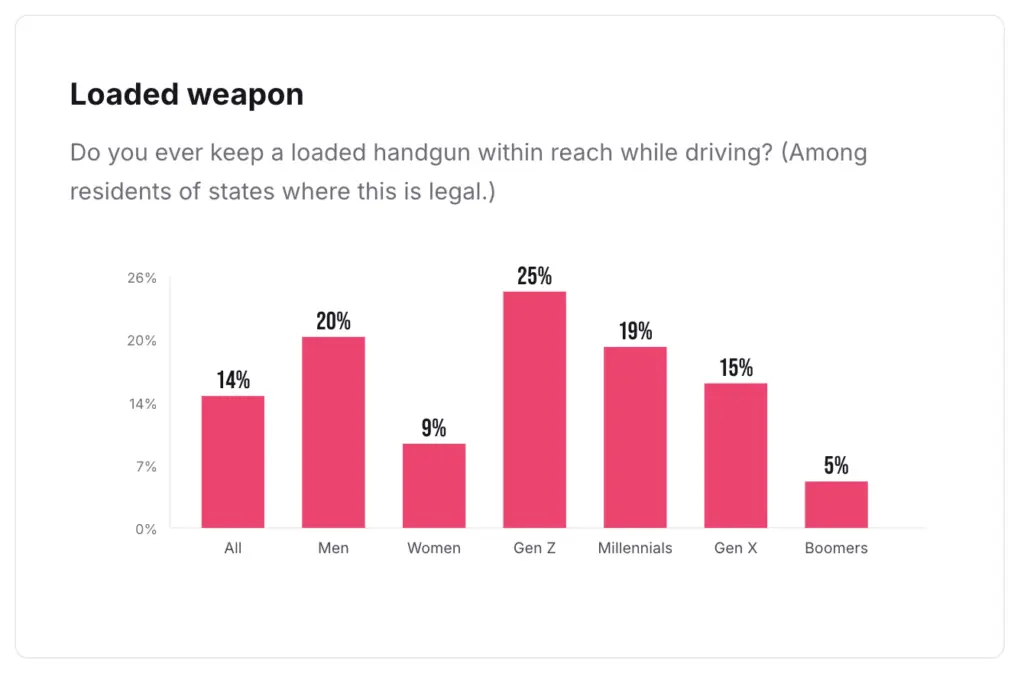
The road rage data points to a deeper change in driver behavior. Fourteen percent of motorists in the 35 states where it is legal to carry a loaded handgun in their car without a permit said they do so at least occasionally. That includes 20% of men and nearly one in 10 women. For Gen Z, more of whom said driving has become more dangerous since COVID, the number was 25%.
Commuting in 2022
Nearly three years into the pandemic, many workers are now returning to their offices… but the old patterns haven’t fully come back. Only 47% of workers say they’re commuting the same number of days as before the pandemic. More than a third (38%) say they’re commuting fewer days or don’t have to commute at all, while 14% say they’re commuting more.
By generation, 18% of Gen X workers and 30% of Boomers say they don’t have to commute at all, versus 7% of Gen Z and Millennial employees. One third of workers commute two days a week or less, while 44% say they commute five days a week or more.
Conclusion: A more expensive new normal
Americans are struggling with the rising cost of car ownership. Pandemic-driven supply-chain disruptions have pushed vehicle prices sharply higher, and while they have begun to fall a bit, they remain much higher than they were a few years ago. In 2022, record-high gas prices and sharply higher interest rates made things worse at a time when overall inflation hit the highest level in four decades. More than a quarter of American drivers now pay more than 15% of their after-tax income just on their car payment alone — before paying for insurance, gas, and maintenance.
In 2023, slightly less than a quarter of American drivers intend to car shop, with vehicle prices and interest rates being the biggest obstacles for those not planning to shop. There is also stronger interest among all demographics in buying an EV, but about half of American drivers still say EVs aren’t for them.
As car ownership costs rise, our mission of saving customers time and money on all areas of car ownership becomes even more meaningful.
Methodology
Jerry’s 2023 State of the American Driver report is based on data from a nationally representative survey of 1,257 respondents conducted in November 2022 using a platform and audience from Pollfish.
Results were filtered to include only respondents who own or lease a vehicle and drive regularly, and were blended for age, gender and state. More information about Pollfish and its audiences can be found on its website.